




menu

Commercial Ventilation & Exhaust Systems in Chicago – Minimize Downtime with Industrial-Grade Air Handling

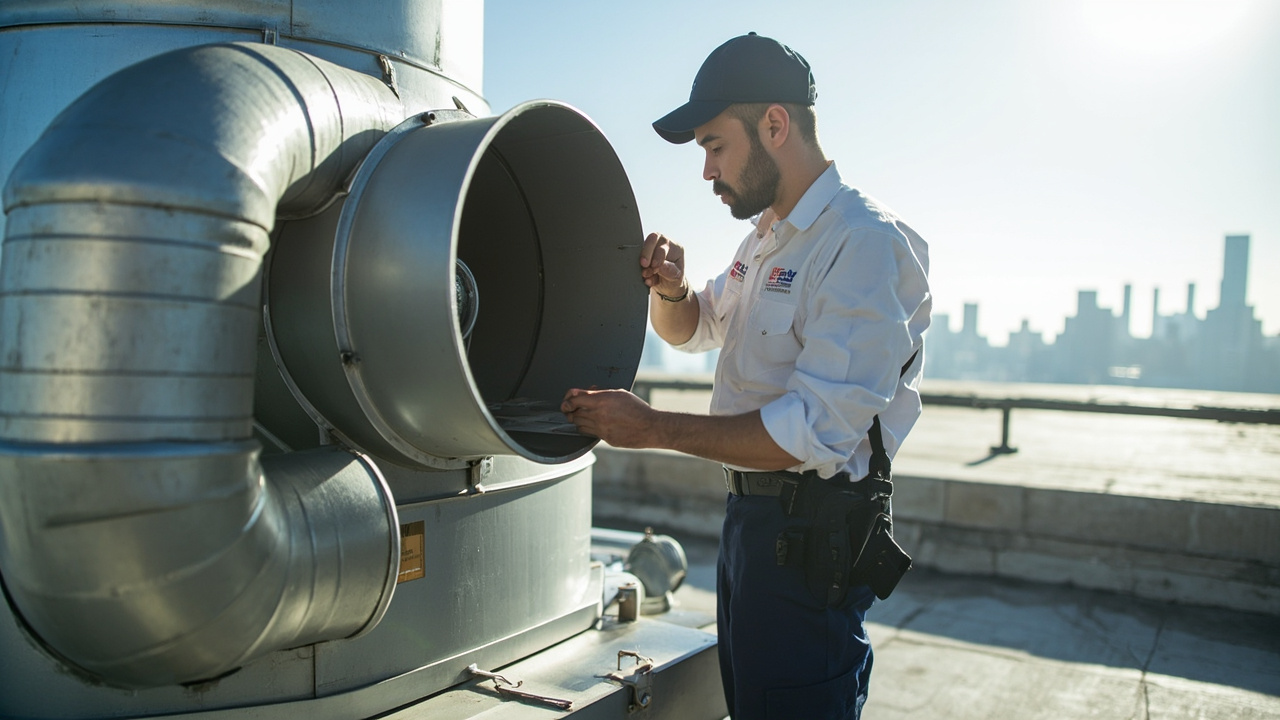
Five Star HVAC Chicago delivers high-capacity mechanical ventilation systems and industrial exhaust solutions engineered for continuous operation in commercial facilities across Chicagoland, from warehouses in Back of the Yards to manufacturing plants in Pilsen.

Slider Image 1
Slider Image 2
Slider Image 3
Slider Image 4
Slider Image 5
Slider Image 7
Slider Image 8
Slider Image 9
Slider Image 10
Slider Image 11

Why Chicago's Industrial Corridor Demands Heavy-Duty Ventilation Infrastructure

Chicago's concentration of food processing plants, metalworking shops, and chemical facilities creates unique air quality challenges that basic HVAC systems cannot address. The city's freeze-thaw cycles stress ductwork integrity, while Lake Michigan's moisture accelerates corrosion in industrial exhaust components. When your manufacturing operation generates welding fumes, solvent vapors, or combustion byproducts, inadequate commercial air extraction creates OSHA violations and liability exposure.

Facilities along the South Branch and near O'Hare industrial zones face additional complications from particulate buildup in mechanical ventilation systems. The Midwest's seasonal temperature swings force air handlers to work harder, reducing component lifespan. Your warehouse in Bridgeport or production floor in Pullman cannot afford unplanned shutdowns from ventilation failure during peak operational periods.

Building codes in Cook County require specific air changes per hour for different commercial occupancies. Restaurant kitchens need grease-rated exhaust hoods that meet Chicago Fire Department standards. Medical labs require negative pressure rooms with HEPA filtration. Automotive shops need dedicated paint booth ventilation that captures VOCs before they reach occupied spaces. Generic commercial ventilation systems fail in these applications because they lack the necessary CFM ratings, makeup air coordination, or hazardous material handling capabilities.

Industrial air handling failures show up as worker complaints about headaches, visible haze in production areas, or failed air quality tests. By the time you notice these symptoms, your facility already violates indoor air standards that trigger fines.

Why Chicago's Industrial Corridor Demands Heavy-Duty Ventilation Infrastructure
How Proper Commercial Ventilation Design Protects Your Operations

How Proper Commercial Ventilation Design Protects Your Operations

Effective industrial exhaust solutions start with accurate load calculations based on your specific contaminant sources and production processes. We measure actual CFM requirements using hood face velocity testing and tracer gas studies, not rule-of-thumb estimates. A metalworking shop generating grinding dust needs different capture velocities than a bakery exhausting steam and flour particulates. The ductwork sizing, fan selection, and discharge stack height must match your facility's contaminant profile.

Makeup air integration separates functional systems from code-compliant installations. When you exhaust 10,000 CFM from a kitchen or industrial process, that air must be replaced or your building goes into negative pressure. Unbalanced systems pull unconditioned air through loading docks and entry doors, creating comfort problems and wasting energy. We calculate heating and cooling loads for tempered makeup air units that maintain building pressure without forcing your primary HVAC system to condition outdoor air continuously.

Modern commercial air extraction incorporates variable frequency drives that reduce energy consumption during low-demand periods. A restaurant exhaust fan running at 100 percent capacity during prep time wastes money and shortens bearing life. Demand-controlled ventilation uses temperature or optical sensors to ramp fan speed based on actual cooking activity, cutting utility costs by 30 to 40 percent compared to constant-volume operation.

Industrial air handling in corrosive environments requires material selection that withstands chemical attack. Pharmaceutical and chemical processing facilities need stainless steel or coated ductwork that resists degradation. Standard galvanized steel fails within months when exposed to acidic fumes or chlorine compounds.

What Happens During a Commercial Ventilation Installation

Commercial Ventilation & Exhaust Systems in Chicago – Minimize Downtime with Industrial-Grade Air Handling
01

Facility Assessment and Load Analysis

We document your contaminant sources, production schedules, and existing HVAC infrastructure to determine actual ventilation requirements. This includes measuring current airflow rates, identifying pressure differentials between spaces, and reviewing building plans to locate structural support points for new ductwork. Your operations continue normally while we gather baseline data that informs system design parameters and equipment specifications.
02

System Design and Permitting

Engineering drawings specify duct routing, fan placement, and control sequences that meet Chicago mechanical code requirements. We coordinate with your facility manager to schedule installations during off-shifts or planned downtime windows. Permit applications submitted to the City of Chicago include detailed specifications showing compliance with air change rates, makeup air provisions, and energy code requirements. Rooftop equipment requires structural calculations to verify adequate load-bearing capacity.
03

Installation and Commissioning

Mechanical installation includes duct fabrication, fan mounting, and electrical connections completed by licensed technicians. We perform test and balance procedures using calibrated instruments to verify design airflow rates at each hood or exhaust point. Commissioning includes functional testing of controls, interlock verification with fire alarm systems, and documentation of performance metrics. You receive operation manuals and maintenance schedules specific to your installed equipment.

Why Chicago Facilities Choose Five Star HVAC for Industrial Ventilation Projects

Chicago's commercial and industrial facilities operate under stringent regulations that generic contractors misunderstand. The city requires specific duct construction standards for grease-laden vapor exhaust from commercial kitchens, mandating fully welded black steel with no fasteners exposed to airflow. Facilities housing hazardous materials need ventilation systems that maintain negative pressure relative to surrounding spaces, preventing contaminant migration during emergency scenarios. We design systems that satisfy these requirements because we work within this regulatory framework daily.

Manufacturing operations in Pilsen, Bridgeport, and McKinley Park face unique spatial constraints from older building stock with limited ceiling height and congested utility runs. Routing ductwork through these facilities requires creative solutions that maintain adequate air velocity without excessive static pressure. Our field experience installing systems in pre-war industrial buildings means we anticipate clearance issues, structural limitations, and coordination conflicts before they delay your project timeline.

Five Star HVAC maintains relationships with specialty suppliers who stock high-capacity centrifugal fans, stainless steel ductwork, and explosion-proof electrical components required for industrial applications. When your production schedule cannot tolerate lead times for custom equipment, we source from local distributors who understand Chicago's commercial market. This supply chain advantage keeps your project moving when national contractors wait weeks for material deliveries.

The South Branch Industrial Corridor and areas near the Calumet River concentrate facilities that generate welding fumes, chemical vapors, and combustion products requiring specialized filtration before atmospheric discharge. We specify scrubbers, electrostatic precipitators, and carbon adsorption systems that capture contaminants before they violate air quality permits. Your facility avoids enforcement actions from the Illinois EPA because your exhaust treatment matches your process emissions.

What to Expect from Your Commercial Ventilation Project

Project Timeline and Scheduling Flexibility

Commercial ventilation installations typically require two to six weeks from permit approval to final commissioning, depending on system complexity and facility size. We schedule work during your off-shifts, weekends, or planned maintenance windows to minimize production interruptions. Rooftop equipment installations occur during favorable weather windows to prevent water intrusion. Your facility manager receives weekly progress updates and advance notice before any work requires utility shutdowns or area access restrictions. Rush projects accommodating lease renewals or regulatory deadlines receive priority scheduling with crew adjustments to compress installation timelines.

Initial Site Assessment Process

The assessment begins with a walkthrough documenting your contaminant sources, current ventilation deficiencies, and spatial constraints affecting equipment placement. We use thermal imaging to identify air leakage paths and pressure imbalances. Your production manager provides information about process schedules, material handling, and future expansion plans that influence system sizing. We measure existing ductwork dimensions and airflow rates to determine if partial system upgrades meet your needs or if complete replacement provides better long-term value. You receive a detailed proposal outlining equipment specifications, installation scope, and code compliance strategies within one week.

System Performance and Air Quality Results

Properly designed mechanical ventilation systems eliminate visible haze, reduce odor complaints, and maintain comfortable working conditions that improve productivity. Industrial exhaust solutions capture contaminants at the source before they disperse throughout your facility, protecting workers from chronic exposure to welding fumes, solvent vapors, or combustible dust. Post-installation air quality testing verifies compliance with OSHA permissible exposure limits for your specific processes. Energy-efficient systems with variable speed drives reduce monthly utility expenses compared to older constant-volume equipment. You receive documentation showing measured airflow rates, filter efficiency ratings, and control sequences for your facility management records.

Maintenance Programs and Service Support

Commercial air extraction systems require quarterly inspections of fan bearings, belt tension, and filter loading to prevent unexpected failures during peak production periods. We offer maintenance contracts that include scheduled filter changes, drive lubrication, and control calibration performed during your planned downtime windows. Emergency service provides rapid response when exhaust fan failures create unsafe working conditions or halt production. Parts inventory for common components like fan belts, motor contactors, and variable frequency drives ensures quick repairs without extended lead times. Your maintenance records document compliance with manufacturer requirements that preserve equipment performance throughout its service life.

Frequently Asked Questions

You Have Questions,
We Have Answers

What is the difference between exhaust system and ventilation system? +

Ventilation systems supply fresh outdoor air into a building and circulate it throughout interior spaces. Exhaust systems remove stale air, moisture, odors, and contaminants from specific areas like restrooms, kitchens, or mechanical rooms. In commercial buildings across Chicago, ventilation handles the entire air exchange for occupant health and code compliance, while exhaust systems target localized pollutant removal. Think of ventilation as the lungs of your building and exhaust as targeted extraction points. Many facilities use both systems working together to maintain indoor air quality and meet Chicago building code requirements for air changes per hour.

How much does a ventilation system cost for a house? +

Residential ventilation system costs vary based on building size, ductwork requirements, and system type. Whole-home mechanical ventilation typically ranges from several thousand to mid-five figures for installation. Energy recovery ventilators cost more upfront but reduce heating expenses during Chicago winters. Existing ductwork condition affects labor costs significantly. Older homes in neighborhoods like Lincoln Park or Hyde Park often require additional structural modifications. System complexity, zoning needs, and integration with existing HVAC equipment influence final pricing. Request detailed load calculations and equipment specifications before committing to ensure proper sizing for your square footage and occupancy levels.

What are the three types of ventilation systems? +

The three main ventilation types are natural, mechanical, and hybrid. Natural ventilation uses windows, vents, and building design to create airflow through pressure differences. Mechanical ventilation uses fans and ductwork to force air movement, including exhaust-only, supply-only, or balanced systems with heat recovery. Hybrid systems combine both approaches, using natural ventilation when weather permits and mechanical systems during extreme Chicago temperatures. Commercial facilities typically require mechanical ventilation to meet code requirements for consistent air changes. Each type has distinct energy consumption profiles, maintenance requirements, and suitability based on building use, occupancy density, and local climate conditions.

How much does a home ventilation system cost? +

Home ventilation system costs depend on equipment type, installation complexity, and building configuration. Basic exhaust-only systems cost less than balanced systems with energy recovery. Heat recovery ventilators and energy recovery ventilators carry higher equipment costs but provide operational savings during Chicago's temperature extremes. Ductwork modifications, electrical requirements, and integration with existing systems affect total investment. Multi-story homes require more extensive distribution networks. Older construction may need structural modifications to accommodate modern ventilation equipment. Factor in ongoing filter replacement and maintenance expenses when budgeting. Professional load calculations ensure proper system sizing to avoid undersized equipment that wastes energy or oversized units that cycle inefficiently.

Why don't people use attic fans anymore? +

Attic fans fell out of favor because they often create negative pressure that pulls conditioned air from living spaces into attics, wasting energy. In Chicago homes with central air conditioning, attic fans can draw cool air upward through ceiling penetrations and bypasses, increasing cooling costs substantially. Modern building science emphasizes proper attic insulation and ventilation through ridge and soffit vents rather than powered fans. Sealed attics with spray foam insulation eliminate the need for attic ventilation entirely. Most energy audits now recommend removing attic fans and sealing air leakage paths instead. Properly designed passive ventilation provides better performance without operational costs or pressure imbalances.

How much does it cost to replace an exhaust vent? +

Exhaust vent replacement costs vary based on location, accessibility, and vent type. Roof-mounted exhaust fans require more labor than wall-mounted units due to flashing details and weatherproofing requirements. Commercial kitchen exhaust systems with grease ductwork cost significantly more than bathroom exhaust replacements. In Chicago, winter weather limits roof work scheduling, potentially affecting project timelines. Equipment specifications like CFM rating, motor horsepower, and construction materials influence pricing. Code compliance requirements for makeup air and fire dampers add expenses to commercial projects. Ductwork modifications or structural reinforcement for heavier equipment increase total investment. Request itemized quotes covering equipment, labor, permits, and warranty terms.

How much is HVAC for a 2000 square foot house? +

HVAC system costs for 2000 square feet depend on equipment efficiency, zoning requirements, and ductwork condition. Standard efficiency systems cost less than high-efficiency models with variable-speed components. Chicago's climate demands robust heating capacity for subzero winters and adequate cooling for humid summers. Multi-zone systems with separate temperature control cost more than single-zone installations. Existing ductwork condition affects replacement expenses significantly. Older homes may require duct sealing, insulation upgrades, or complete replacement. Equipment type matters as well. Heat pumps, dual-fuel systems, and traditional furnace-and-AC combinations have different price points. Factor in permit fees and code compliance requirements for Chicago installations.

Are ventilators covered by insurance? +

Insurance coverage for ventilation equipment depends on policy terms and failure circumstances. Standard commercial property policies typically cover ventilation systems damaged by covered perils like fire, wind, or vandalism. Gradual deterioration or poor maintenance usually falls outside coverage. Business interruption insurance may cover revenue losses from ventilation system failures that force temporary closures. Equipment breakdown coverage extends protection to mechanical failures in HVAC and ventilation components. Review your policy declarations and exclusions carefully. In Chicago, weather-related damage from ice dams or severe storms may trigger claims. Document all maintenance records and inspections to support potential claims. Consult your insurance agent about specific coverage gaps.

What are the signs of poor ventilation? +

Poor ventilation shows up as persistent odors, excessive humidity, visible condensation on windows and surfaces, and mold growth in corners or on walls. Occupants may experience headaches, fatigue, respiratory irritation, or difficulty concentrating due to elevated carbon dioxide levels. In Chicago commercial buildings, stale air complaints increase during winter when outdoor air intake gets minimized to save heating costs. Dust accumulation on surfaces despite regular cleaning indicates inadequate air circulation. Temperature stratification where upper floors feel stuffy while lower levels stay cool suggests ventilation imbalances. HVAC systems running constantly without achieving comfort point to insufficient fresh air delivery or poor air distribution design.

What are common ventilation system problems? +

Common ventilation problems include inadequate outdoor air intake, unbalanced air distribution, clogged filters restricting airflow, and failed damper actuators stuck in closed positions. Ductwork leakage wastes conditioned air before reaching occupied spaces. Undersized equipment cannot deliver required air changes per hour during peak occupancy. In Chicago facilities, freezing conditions can ice up outdoor air dampers or heat recovery cores if preheat systems fail. Dirty heat exchanger coils reduce efficiency and airflow capacity. Control system failures prevent proper coordination between supply and exhaust fans, creating pressure imbalances. Deferred maintenance on motors and bearings leads to unexpected breakdowns. Regular preventive maintenance and system commissioning prevent most ventilation failures.

How Chicago's Industrial Zoning and Legacy Buildings Complicate Ventilation Upgrades

Chicago's concentration of pre-1950 industrial buildings in neighborhoods like Pilsen and Back of the Yards creates ventilation challenges unknown in newer construction. These facilities feature heavy timber construction, limited ceiling heights, and congested mechanical spaces that restrict ductwork routing options. Structural steel framing often cannot support modern rooftop air handlers without costly reinforcement. The city's Planned Manufacturing District regulations restrict building modifications that could displace industrial uses, requiring ventilation upgrades to work within existing building envelopes. Lake Michigan's proximity accelerates corrosion on exterior exhaust stacks and intake louvers, shortening equipment replacement cycles compared to inland locations.

Five Star HVAC understands Chicago's building code enforcement patterns and inspection priorities that affect commercial ventilation projects. The Department of Buildings requires detailed shop drawings showing compliance with Chapter 4 of the Chicago Mechanical Code before issuing permits for exhaust systems serving commercial kitchens or industrial processes. We maintain working relationships with mechanical inspectors who understand the practical constraints of retrofitting ventilation systems into existing facilities. Our familiarity with local sheet metal fabricators and specialty equipment suppliers ensures your project sources quality components without national supply chain delays that stall construction timelines.
HVAC Services in The Chicago Area

Whether you’re dealing with a heating emergency or planning an AC upgrade, Five Star is just around the corner. Serving Chicago and surrounding communities, we’re proud to be the go-to HVAC company for homes and businesses alike. Use the map below to locate us quickly, or give us a call for directions or on-site service availability. We’re always ready to help, no matter where you are in the area — because comfort should never be out of reach.

Address:
Five Star HVAC Chicago, 2828 N Clark St, Chicago, IL, 60657

Additional Services We Offer

Our news updates

Latest Articles & News from The Blogs

Living in a dense Chicago neighborhood like Chinatown offers incredible access to culture and food. The narrow alleys and brick…

Quiet the Echo of Your Neighbors Loud AC in a Chinatown Alleyway

Living in a dense Chicago neighborhood like Chinatown offers incredible access to culture and food. The narrow alleys and brick…

Keeping Your Morgan Park Home Warm During a Winter Power Outage

Winter in Morgan Park brings a unique set of challenges for homeowners. The neighborhood is famous for its beautiful canopy…

Comparing Carrier and Trane for the unpredictable Chicago climate

The High Stakes of Chicago Climate Performance in 2026Chicago weather moves from one extreme to another with very little warning.…

Contact Us

Your production schedule cannot wait for contractors who misunderstand industrial air quality requirements. Call Five Star HVAC Chicago at (708) 328-5999 for a facility assessment that identifies ventilation deficiencies and provides engineered solutions meeting Chicago code requirements.