



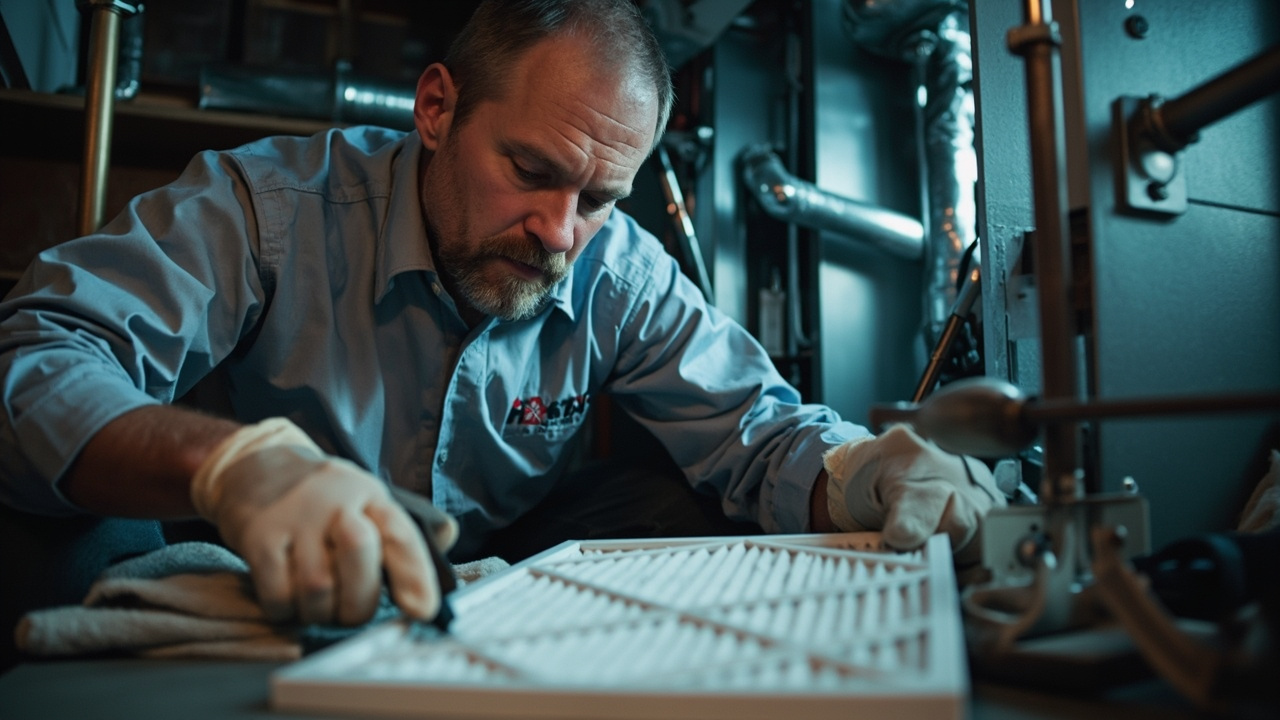


Lake Michigan's proximity creates humidity fluctuations that accelerate filter saturation. When cold air masses move across the warmer lake surface, moisture-laden air carries particulates that clog filters 30 percent faster than inland areas. Spring and fall transitions bring rapid temperature swings that create condensation inside ductwork. This moisture combines with dust on filter media to form a dense mat that blocks airflow and promotes mold growth. Neighborhoods along the lakefront from Rogers Park down to Hyde Park experience the most pronounced effects, requiring more frequent air conditioning filter exchange and furnace filter replacement than western suburbs.
Chicago's mechanical code requires commercial buildings to maintain minimum ventilation rates that put additional load on filtration systems. Buildings constructed before 1980 often have undersized return ductwork that increases filter pressure drop. Five Star HVAC Chicago works with property managers and facility directors throughout the Loop, River North, and West Loop to develop filter maintenance schedules that meet code requirements while minimizing energy consumption. Our familiarity with Chicago's building stock and local inspection standards ensures your filter replacement services are compliant and documented for audits. We understand the technical requirements and the practical realities of maintaining HVAC systems in Chicago's diverse building types.