



menu

Building Automation Systems in Chicago – Minimize Downtime with Integrated Commercial HVAC Controls

Deploy Energy Management Systems and Direct Digital Controls that reduce operational costs, prevent system failures during peak demand, and keep your facility compliant with Chicago's commercial building energy codes.

Slider Image 1
Slider Image 2
Slider Image 3
Slider Image 4
Slider Image 5
Slider Image 7
Slider Image 8
Slider Image 9
Slider Image 10
Slider Image 11

Why Chicago Facilities Need Smarter Building Control Systems

Chicago commercial buildings operate under extreme thermal stress. Winter temperatures plunge below zero while summer heat indexes spike above 100 degrees. Your HVAC load swings wildly between heating and cooling, often within the same week during shoulder seasons. Without integrated Building Management Systems, you are running equipment reactively, burning energy during off-peak hours, and risking catastrophic failures when demand peaks.

Chicago's commercial building stock skews older. Many properties in the Loop, River North, and West Loop were built before modern energy codes took effect. Legacy pneumatic controls and standalone thermostats cannot optimize performance across multiple systems. You are leaving money on the table every billing cycle.

Building Automation Systems connect your HVAC, lighting, and ventilation into a single platform. Direct Digital Controls monitor real-time conditions and adjust setpoints automatically. Energy Management Systems track consumption patterns and flag inefficiencies before they become failures. You gain visibility into every zone, every air handler, and every piece of equipment.

The result is fewer emergency service calls, lower utility bills, and compliance with Chicago's energy benchmarking ordinance. When your boiler fails at 3 a.m. in January, integrated controls send alerts before tenants notice. When your rooftop units overcool during a July heatwave, the system self-corrects before you waste another kilowatt. Building Control Systems eliminate guesswork and keep your facility running.

Why Chicago Facilities Need Smarter Building Control Systems
How We Deploy Commercial HVAC Controls That Actually Work

How We Deploy Commercial HVAC Controls That Actually Work

We do not install cookie-cutter systems. Five Star HVAC Chicago performs a full load analysis and system audit before recommending any Building Automation System. We map your existing infrastructure, document control sequences, and identify integration points. If you have a mix of old pneumatic actuators and newer digital controllers, we design a phased migration that maintains uptime.

Our installations use open protocol systems. You are not locked into proprietary software or single-vendor service contracts. BACnet and LonWorks compatibility means you can expand, modify, or service the system without ripping out hardware. We program custom control sequences that match your occupancy schedules, not generic factory defaults.

Direct Digital Controls replace analog thermostats with sensors that measure temperature, humidity, and CO2 levels. We install variable frequency drives on fans and pumps to modulate speed based on demand. Economizer controls maximize free cooling when outdoor conditions allow. Demand-controlled ventilation reduces airflow in unoccupied zones.

Energy Management Systems log performance data and generate reports for Chicago's building energy use benchmarking compliance. You can track kilowatt-hours per square foot, identify rogue equipment, and justify capital upgrades with hard numbers. We configure alarm thresholds so you receive alerts for filter changes, refrigerant leaks, and equipment cycling issues before they cascade into failures.

Integration with your existing Building Management Systems happens through secure gateways. We test communication protocols, verify sensor accuracy, and train your facility team on dashboards and override functions. You gain centralized control without tearing apart walls or shutting down floors.

What a Building Automation Systems Deployment Looks Like

Building Automation Systems in Chicago – Minimize Downtime with Integrated Commercial HVAC Controls
01

System Audit and Integration Planning

We survey your facility to document existing HVAC equipment, control panels, and wiring infrastructure. Our technicians map communication networks, identify compatibility issues, and design a control architecture that integrates with your current Building Management Systems. You receive a detailed scope that outlines hardware placement, programming sequences, and expected energy savings before any work begins.
02

Hardware Installation and Programming

We install Direct Digital Controls, sensors, actuators, and network controllers during scheduled downtime to avoid disrupting operations. Our team programs custom control sequences, configures alarm setpoints, and integrates Energy Management Systems with your billing software. We test each zone for accurate temperature response, verify damper operation, and commission economizer cycles. Your facility remains operational throughout the installation.
03

Training and Ongoing Optimization

Once the system is live, we train your facility staff on dashboard navigation, alarm response, and manual override procedures. We provide documentation for control sequences and troubleshooting protocols. Our technicians monitor performance remotely during the first 90 days, adjusting setpoints and tuning algorithms based on actual occupancy and weather patterns. You gain full control over your Building Control Systems with ongoing support as needed.

Why Chicago Facility Managers Choose Five Star HVAC for Building Automation

We understand Chicago's commercial building environment. Our technicians work on high-rises in the Loop, industrial facilities in Pilsen, and mixed-use developments in Lincoln Park. We know the challenges of integrating controls in buildings with steam heat, chilled water loops, and rooftop packaged units. We have deployed Building Automation Systems in properties governed by historic district codes and in LEED-certified buildings with strict energy targets.

Five Star HVAC Chicago holds certifications in BACnet protocol and Tridium Niagara platforms. Our team programs control logic that accounts for Chicago's rapid weather shifts and peak demand pricing from ComEd. We design systems that reduce demand charges by load shedding during high-cost periods and pre-cooling during off-peak hours.

We do not disappear after installation. Our service agreements include remote monitoring, software updates, and annual recommissioning. When your Building Management Systems flag an anomaly, we can diagnose issues remotely and dispatch technicians with the correct parts. You avoid the downtime and cost of trial-and-error repairs.

Chicago's energy benchmarking ordinance requires annual reporting for commercial buildings over 50,000 square feet. Our Energy Management Systems automatically generate compliance reports with verified data. You meet deadlines without hiring consultants or manually pulling utility bills.

Facility managers choose us because we deliver systems that reduce callbacks. Our installations pass inspection on the first visit. Our technicians communicate in plain language, not vendor jargon. You get transparent pricing, realistic timelines, and systems that work the day we hand over the keys.

What to Expect from Your Building Automation Systems Installation

Project Timeline and Phased Deployment

Most Building Automation Systems installations take four to eight weeks depending on facility size and complexity. We schedule work during off-hours or in phases to avoid disrupting business operations. Small office buildings can go live in two weeks. Multi-building campuses with legacy infrastructure may require staged commissioning. We provide a detailed timeline during the proposal phase and update you on progress weekly. Rush deployments are available for facilities facing compliance deadlines or energy cost crises.

Comprehensive System Assessment and Load Analysis

Our initial assessment includes a walkthrough of mechanical rooms, review of existing control schematics, and load profile analysis using utility data. We test current sensor calibration, document control sequences, and measure airflow at critical points. You receive a written report identifying inefficiencies, code violations, and opportunities for energy savings. We recommend hardware upgrades, programming changes, and integration strategies. The assessment takes one to three days depending on facility size. You understand exactly what needs fixing before committing to a full installation.

Integrated Control and Real-Time Monitoring

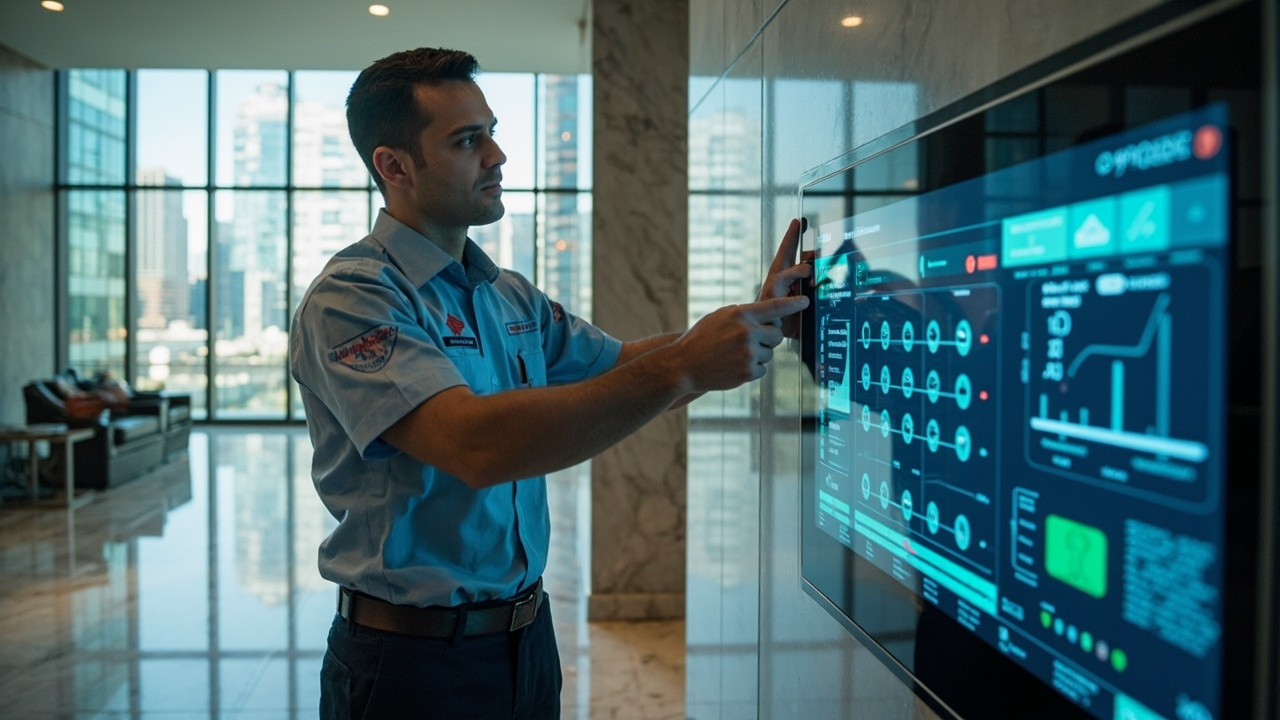
Your completed Building Automation System provides centralized control over HVAC, lighting, and ventilation from a single dashboard. You can adjust zone setpoints, schedule occupancy modes, and override equipment from any networked device. Direct Digital Controls maintain precise temperature and humidity levels. Energy Management Systems track consumption in real time and generate alerts for abnormal usage. You gain visibility into equipment runtime, filter status, and refrigerant pressures. The system logs data for compliance reporting and energy audits. Your facility operates efficiently without constant manual intervention.

Ongoing Support and System Optimization

We offer service agreements that include remote monitoring, software updates, and annual recommissioning. Our technicians can access your Building Management Systems remotely to diagnose alarms, adjust setpoints, and verify sensor accuracy. Annual recommissioning ensures control sequences match current occupancy patterns and equipment performance. We provide firmware updates and security patches for controllers and gateways. Emergency support is available 24/7 for critical system failures. You maintain peak efficiency and compliance without dedicating internal staff to constant monitoring.

Frequently Asked Questions

You Have Questions,
We Have Answers

What are building automation systems? +

Building automation systems are centralized networks that control and monitor mechanical and electrical equipment in commercial facilities. These systems manage HVAC, lighting, security, fire safety, and energy distribution through programmable controllers and sensors. In Chicago, where buildings face extreme temperature swings from -20°F winters to 95°F summers, automation systems optimize climate control while reducing energy waste. The system collects real-time data, adjusts equipment performance automatically, and provides facility managers with remote monitoring capabilities. This technology cuts operational costs, extends equipment lifespan, and maintains consistent environmental conditions across multi-floor or multi-building properties.

What are the 4 types of automation systems? +

The four main types are fixed automation, programmable automation, flexible automation, and integrated automation. Fixed automation handles repetitive tasks without variation. Programmable automation allows sequence changes through software reprogramming, common in Chicago manufacturing facilities. Flexible automation adapts to different production requirements without complete reprogramming, useful for businesses with changing operational needs. Integrated automation combines multiple systems into one unified platform, connecting HVAC, security, lighting, and fire safety under single-point control. Most Chicago commercial properties use integrated automation because it provides the most comprehensive facility management, reduces labor costs, and enables real-time adjustments across all building systems simultaneously.

What are the top 5 BMS systems? +

The top five building management systems are Johnson Controls Metasys, Siemens Desigo, Honeywell Enterprise Buildings Integrator, Schneider Electric EcoStruxure, and Tridium Niagara Framework. These platforms dominate Chicago commercial installations because they handle complex multi-building portfolios and integrate with existing infrastructure. Johnson Controls maintains strong local presence in the Chicago metro area. Each system offers scalability, cybersecurity protocols, and cloud-based analytics. Selection depends on building size, existing equipment compatibility, and long-term expansion plans. Chicago facilities with older infrastructure often choose systems with robust backward compatibility to avoid complete equipment replacement during automation upgrades.

What is the typical BMS system? +

A typical BMS system consists of sensors, controllers, actuators, and a central management interface. Sensors measure temperature, humidity, pressure, and occupancy throughout the building. Controllers process this data and execute programmed responses. Actuators physically adjust dampers, valves, and switches based on controller commands. The central interface provides facility managers with system oversight, alarm notifications, and performance reports. In Chicago commercial buildings, systems typically include HVAC control, lighting schedules, access control integration, and energy metering. The system operates continuously, making micro-adjustments to maintain setpoints while minimizing energy consumption. Cloud connectivity enables remote monitoring from any location with internet access.

Is a BAS system hard to install? +

BAS installation difficulty depends on building size, existing infrastructure, and system complexity. New construction installations are straightforward because contractors install sensors, controllers, and wiring during the build phase. Retrofit installations in occupied Chicago buildings require careful planning to minimize business disruption. You need qualified technicians who understand both IT networking and mechanical systems. Installation involves running communication cables, mounting field devices, programming control sequences, and integrating with existing equipment. Chicago buildings with asbestos-containing materials or historic preservation requirements face additional complexity. Timeline ranges from weeks for small properties to months for large commercial complexes. Proper installation requires coordination between electrical contractors, HVAC technicians, and network specialists.

What is BMS in simple words? +

A BMS is a computer system that controls and monitors building equipment automatically. Think of it as the building's brain. It keeps occupants comfortable while reducing energy waste. The system turns lights on and off based on occupancy, adjusts heating and cooling based on outdoor temperature, and alerts managers when equipment malfunctions. In Chicago commercial properties, the BMS handles the constant battle between frigid winters and humid summers by optimizing HVAC performance continuously. Instead of manually adjusting thermostats across multiple floors, facility managers set parameters once and the system maintains conditions automatically. This reduces labor costs and catches equipment problems before they cause complete failures.

What are examples of automation systems? +

Common automation examples include HVAC scheduling that reduces heating during unoccupied hours, occupancy-based lighting that turns off in empty rooms, and demand-controlled ventilation that adjusts fresh air intake based on CO2 levels. Chicago retail spaces use automated storefront lighting that adjusts with daylight availability. Office buildings implement elevator dispatch systems that reduce wait times during morning arrivals. Parking garages use automated lighting and ventilation based on vehicle presence. Manufacturing facilities automate production line equipment, material handling systems, and environmental controls. Healthcare properties automate nurse call systems, temperature monitoring for pharmaceutical storage, and air pressure control in isolation rooms. Each example reduces labor requirements while improving consistency and response times.

What are the 4 D's of automation? +

The four Ds of automation are Dull, Dirty, Dangerous, and Dear. Dull refers to repetitive tasks that waste human talent, like manually adjusting thermostats hourly. Dirty applies to tasks in uncomfortable environments, such as monitoring rooftop HVAC units during Chicago winters. Dangerous covers tasks with safety risks, including climbing ladders to check equipment or working near high-voltage panels. Dear represents expensive processes where automation reduces costs through improved efficiency and reduced labor. Building automation addresses all four Ds by handling routine monitoring, performing remote diagnostics, eliminating hazardous manual inspections, and optimizing energy consumption. This framework helps facility managers identify which processes deliver the highest ROI when automated.

What are the three main automations? +

The three main automations in commercial buildings are climate control, lighting control, and security management. Climate control automation manages HVAC equipment to maintain temperature and humidity setpoints while minimizing energy consumption. In Chicago properties, this means automatically switching between heating and cooling modes as weather fluctuates. Lighting control automation adjusts interior and exterior lighting based on occupancy, daylight availability, and time schedules. Security automation includes access control, surveillance camera management, and alarm monitoring. These three systems often integrate into one platform, allowing facility managers to control all building functions from a single interface. Integration improves operational efficiency and enables automated responses across multiple systems simultaneously.

What is SCADA vs BMS? +

SCADA focuses on industrial process control and data acquisition across distributed facilities, while BMS manages commercial building systems. SCADA monitors production equipment, utility distribution networks, and manufacturing processes. It handles larger geographic areas and collects data from remote sites. BMS controls HVAC, lighting, and life safety systems within individual buildings or campuses. Chicago manufacturing facilities use SCADA for production lines, while office towers use BMS for occupant comfort. SCADA requires specialized programming and handles critical infrastructure with stricter reliability requirements. BMS prioritizes energy efficiency and occupant comfort. Some large Chicago commercial properties use both, with SCADA managing central plants and BMS controlling individual building zones.

How Chicago's Extreme Temperature Swings Demand Smarter Building Control Systems

Chicago experiences a 140-degree temperature range between winter lows and summer highs. Your HVAC system must pivot from heating to cooling within days during spring and fall. Without Building Automation Systems that adapt to these swings, you waste energy preheating or precooling spaces based on outdated schedules. Direct Digital Controls monitor outdoor air temperature and adjust economizer dampers to maximize free cooling when lake breezes drop temperatures in the afternoon. Energy Management Systems reduce boiler firing rates when solar gain heats south-facing zones. Integrated controls eliminate the lag time between weather changes and system response.

Chicago's commercial building codes require energy benchmarking and regular commissioning for facilities over 50,000 square feet. Five Star HVAC Chicago designs Building Management Systems that generate compliance reports automatically, pulling data from utility meters and equipment logs. We work with property managers in every Chicago neighborhood, from the South Loop to Old Town, who need systems that meet municipal energy disclosure requirements. Choosing a local provider means faster emergency response when equipment fails during a polar vortex or heat emergency. We stock parts for controllers and sensors commonly used in Chicago's building stock and deploy technicians who know the city's infrastructure.

HVAC Services in The Chicago Area

Whether you’re dealing with a heating emergency or planning an AC upgrade, Five Star is just around the corner. Serving Chicago and surrounding communities, we’re proud to be the go-to HVAC company for homes and businesses alike. Use the map below to locate us quickly, or give us a call for directions or on-site service availability. We’re always ready to help, no matter where you are in the area — because comfort should never be out of reach.

Address:
Five Star HVAC Chicago, 2828 N Clark St, Chicago, IL, 60657

Additional Services We Offer

Our news updates

Latest Articles & News from The Blogs

Living in a dense Chicago neighborhood like Chinatown offers incredible access to culture and food. The narrow alleys and brick…

Quiet the Echo of Your Neighbors Loud AC in a Chinatown Alleyway

Living in a dense Chicago neighborhood like Chinatown offers incredible access to culture and food. The narrow alleys and brick…

Keeping Your Morgan Park Home Warm During a Winter Power Outage

Winter in Morgan Park brings a unique set of challenges for homeowners. The neighborhood is famous for its beautiful canopy…

Comparing Carrier and Trane for the unpredictable Chicago climate

The High Stakes of Chicago Climate Performance in 2026Chicago weather moves from one extreme to another with very little warning.…

Contact Us

Stop reacting to equipment failures and start controlling your facility's performance. Call Five Star HVAC Chicago at (708) 328-5999 to schedule a system assessment. We will show you where you are losing money and how Building Automation Systems can fix it.