




menu

Understanding Ductless Systems in Chicago – Your Complete Guide to Mini Split Heat Pumps for Year-Round Comfort

Learn how ductless mini splits work, what makes ductless heat pumps ideal for Chicago's extreme weather swings, and whether a ductless HVAC system is right for your home or business.

Slider Image 1
Slider Image 2
Slider Image 3
Slider Image 4
Slider Image 5
Slider Image 7
Slider Image 8
Slider Image 9
Slider Image 10
Slider Image 11

Why Chicago Properties Are Turning to Ductless Systems

Chicago's brutal temperature swings test every heating and cooling system. You face subzero January nights and humid July afternoons that push 95 degrees. Traditional forced-air systems struggle with this range, and older homes in neighborhoods like Lincoln Park or Hyde Park often lack the space for full ductwork installations.

Ductless mini split systems solve these problems. A ductless heat pump moves refrigerant between an outdoor compressor and one or more indoor air handlers mounted on your walls. No ducts means no energy loss through leaky connections, and you control each zone independently. One room can stay cool while another stays warm.

The basics of mini split systems are simple. The outdoor unit houses the compressor and condenser. Refrigerant lines run through a small hole in your exterior wall to connect with indoor units. These air handlers blow conditioned air directly into your space. You get heating and cooling from one system because the refrigerant flow reverses direction depending on your needs.

Chicago's aging housing stock makes ductless air conditioning particularly practical. Adding ductwork to a vintage brick two-flat or a Bungalow Belt home often means tearing open walls and ceilings. A ductless system installs in hours, not days. You preserve your interior finishes and avoid the disruption that comes with major renovations.

What are ductless heat pumps capable of in real Chicago conditions? Modern systems heat efficiently down to negative 13 degrees Fahrenheit. That covers most winter days without backup heat. You save money because you only condition the rooms you use, and you eliminate the 20 to 30 percent energy loss that happens in typical duct systems.

Why Chicago Properties Are Turning to Ductless Systems
How Ductless Mini Splits Work in Practice

How Ductless Mini Splits Work in Practice

The refrigeration cycle powers every ductless system. Liquid refrigerant absorbs heat from indoor air when cooling. It evaporates into a gas, travels to the outdoor unit, releases that heat through the condenser coil, and returns as a liquid to repeat the cycle. For heating, the cycle reverses. The outdoor unit pulls heat from outside air, even in cold weather, and delivers it indoors.

The inverter-driven compressor makes this system efficient. Traditional HVAC systems run at full capacity or shut off completely. This creates temperature swings and wastes energy. A ductless compressor modulates its speed to match your exact heating or cooling demand. It runs at 40 percent capacity on mild days and ramps up to 100 percent when temperatures drop.

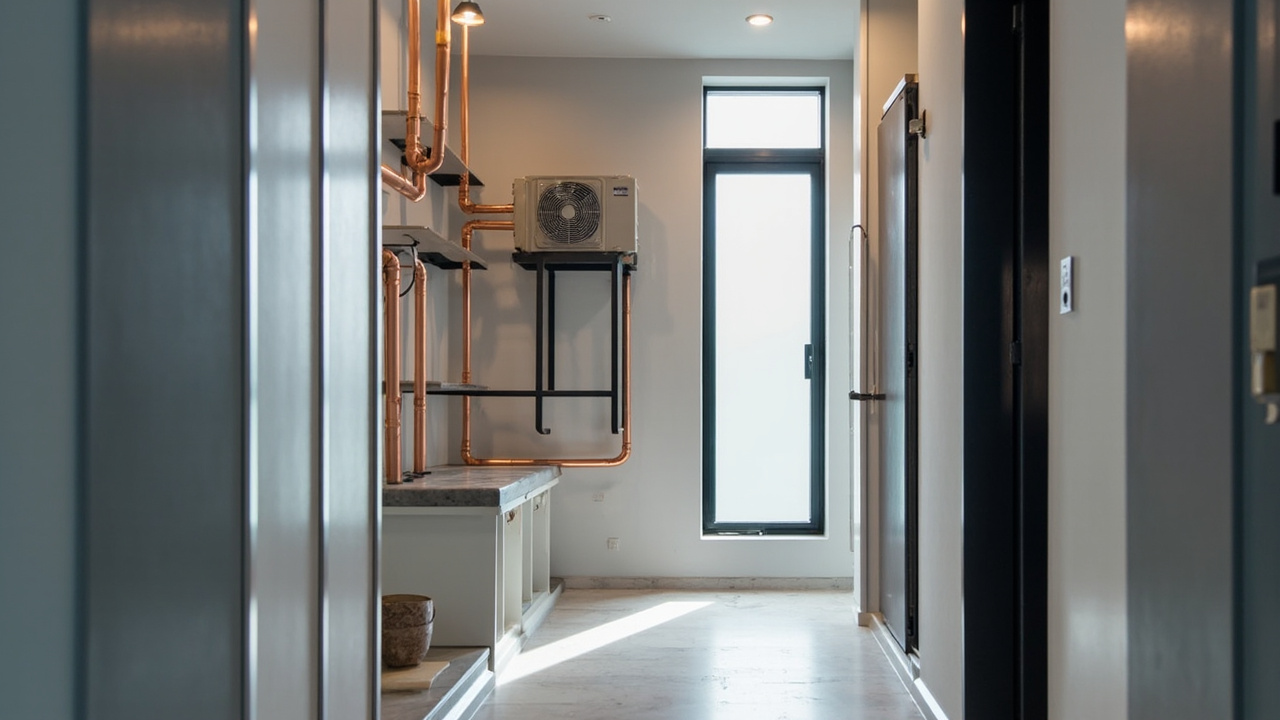
Line sets connect your indoor and outdoor units. These copper tubes carry refrigerant, along with electrical wiring and a condensate drain line. The installation requires a three-inch hole through your exterior wall. Installers mount the outdoor unit on a concrete pad or wall bracket, then run the line set to each indoor air handler. The refrigerant charge must match manufacturer specifications exactly or the system loses efficiency and risks compressor damage.

Multi-zone configurations let you control up to eight indoor units from one outdoor compressor. You set different temperatures for your bedroom, living room, and finished basement. Each zone operates independently with its own remote or wall control. This zoning capability cuts energy bills because you stop heating or cooling empty spaces.

Chicago building codes require proper drainage for condensate. Indoor units produce moisture as they cool humid summer air. That water drains through a small tube to the outside or into a nearby floor drain. Frozen drain lines cause winter problems, so proper installation includes insulation and heat tape in exposed areas.

What Happens When You Choose Ductless

Understanding Ductless Systems in Chicago – Your Complete Guide to Mini Split Heat Pumps for Year-Round Comfort
01

Load Calculation and Design

A proper ductless installation starts with a Manual J load calculation. Your technician measures each room, evaluates insulation levels, counts windows, and factors in Chicago's climate data. This calculation determines the BTU capacity you need. Oversized systems short-cycle and fail to dehumidify properly. Undersized systems run continuously and never reach your set temperature. The math must be exact.
02

Strategic Unit Placement

Indoor air handler placement affects comfort and efficiency. Units mount high on interior walls for optimal air circulation. You want supply air to reach the entire room without creating dead zones. The outdoor unit needs adequate clearance for airflow and service access. Installers consider snow drift patterns in Chicago winters and position compressors away from areas where drifts accumulate and block the coil.
03

Commissioning and Verification

After installation, technicians evacuate air and moisture from the line sets using a vacuum pump. They verify refrigerant charge with superheat and subcooling measurements. The system runs through heating and cooling cycles while the installer checks airflow, temperature splits, and condensate drainage. You receive training on remote functions, filter cleaning, and seasonal maintenance requirements. Proper commissioning prevents callbacks and extends equipment life.

Why Local Chicago Expertise Matters for Ductless Installations

Chicago's building codes and permit requirements differ by neighborhood. Historic districts have strict rules about exterior unit placement and visibility. Your installer needs to know these regulations before mounting equipment on your home. A rejected permit or failed inspection costs you time and money.

The lake effect creates microclimates across the city. Properties near Lake Michigan face higher humidity and stronger winds than homes in the western suburbs. Your system sizing and equipment selection must account for these differences. A contractor who works throughout the Chicago metro understands how location affects performance.

Electrical service matters. Many older Chicago homes have 100-amp panels that struggle to handle modern loads. Adding a ductless system requires a dedicated circuit. Sometimes this means upgrading your electrical service. A local contractor coordinates with electricians who know Chicago's building stock and can predict these issues during the estimate phase.

Winter backup heat becomes critical below zero degrees. Some ductless heat pumps maintain full capacity down to negative temperatures, but older or budget models lose efficiency quickly. You need to know whether your system requires supplemental electric resistance heat or whether it handles Chicago winters independently. Five Star HVAC Chicago matches equipment to realistic local conditions, not manufacturer marketing claims.

Warranty service depends on authorized dealers with factory training. When your system needs repairs, you want a company with parts in stock and technicians who specialize in your brand. Generic HVAC companies treat ductless as an afterthought. Specialists understand the diagnostic software, refrigerant handling procedures, and electronic controls that make these systems different from traditional equipment.

What You Should Know Before Installing Ductless

Installation Timeline and Disruption

A typical single-zone ductless installation takes four to six hours. Multi-zone systems require eight to twelve hours depending on unit count and line set routing complexity. The work happens in one day for most residential projects. You stay in your home during installation. Noise comes from drilling the exterior penetration and running line sets, but this lasts only a few hours. Commercial installations take longer because of structural considerations and electrical coordination. You schedule around business hours to minimize disruption.

Site Assessment and System Selection

The consultation includes measuring your spaces, evaluating electrical service, and identifying optimal equipment locations. Your technician checks for obstacles like electrical panels, plumbing stacks, or structural members that affect line set routing. You discuss heating and cooling priorities for each zone. Do you want maximum efficiency, budget equipment, or advanced features like air purification and smart controls? The assessment takes 45 to 90 minutes. You receive a detailed proposal with equipment specifications, installation scope, and payment options.

Performance and Comfort Results

Ductless systems reach set temperature faster than forced air. You feel conditioned air within minutes instead of waiting for ducts to distribute air throughout your home. The inverter compressor maintains consistent temperatures without the temperature swings that come from on-off cycling. Humidity control improves because the system runs longer at lower speeds, giving the evaporator coil more time to remove moisture. You eliminate the dust distribution that happens with duct systems. Air filters in each indoor unit capture particles before they circulate.

Maintenance Requirements and Longevity

Indoor unit filters need cleaning every four to six weeks. You remove the front panel, pull out the mesh filters, vacuum or rinse them, and reinstall when dry. This takes five minutes per unit. Annual professional maintenance includes cleaning the outdoor coil, checking refrigerant levels, testing electrical connections, and verifying condensate drainage. Chicago winters require checking the outdoor unit for ice buildup and ensuring defrost cycles work properly. Ductless systems last 15 to 20 years with proper maintenance, longer than traditional forced-air equipment.

Frequently Asked Questions

You Have Questions,
We Have Answers

What is the $5000 AC rule? +

The $5000 AC rule refers to an IRS tax guideline for business expenses. If you replace or upgrade HVAC equipment costing less than $5000, you can often deduct it as a repair expense in the same tax year. Anything over that threshold may need to be depreciated as a capital improvement over several years. This rule matters to Chicago business owners replacing aging systems in older commercial buildings. Always consult a tax professional to confirm eligibility. The threshold can change based on IRS updates and specific business situations.

What are the disadvantages of a ductless mini split? +

Ductless mini splits have a few drawbacks. The indoor wall units are visible and may not fit every interior design preference. Initial installation costs run higher than window units. Each indoor head requires a refrigerant line running through your wall to the outdoor unit, which means drilling holes. In Chicago's freezing winters, older mini split models lose efficiency below 5 degrees, though newer cold-climate units handle subzero temperatures better. You also need multiple indoor heads to cover larger homes, which increases upfront investment compared to central forced air systems.

Why is my electric bill so high with mini split? +

High electric bills with mini splits usually come from incorrect sizing, poor installation, or misuse. If your system is oversized, it short-cycles and wastes energy. Leaky refrigerant lines force the compressor to work harder. Running the unit in heating mode during Chicago's coldest weeks taxes the system. Leaving units on full blast instead of using programmable settings increases consumption. Dirty filters reduce airflow and efficiency. Also, if you installed a mini split in a poorly insulated space, the system runs constantly to maintain temperature, driving up costs.

How many mini splits do I need for a 2000 square foot house? +

A 2000 square foot house in Chicago typically needs two to four mini split indoor heads, depending on layout and insulation. Open floor plans may need fewer units, while homes with multiple closed rooms require more. Each indoor head covers roughly 500 to 700 square feet. Factor in Chicago's temperature swings and insulation quality. Older homes with poor insulation need more capacity. A professional load calculation accounts for window placement, ceiling height, and sun exposure. Undersizing leaves rooms uncomfortable. Oversizing wastes money and reduces efficiency.

How do Amish cool their homes without air conditioning? +

Amish communities cool their homes using passive methods and non-electric technology. They rely on strategic window placement for cross-ventilation, whole-house fans powered by diesel generators or pneumatic systems, and reflective window coverings to block solar heat. Thick stone or brick walls provide thermal mass. Basements stay naturally cool in summer. Some use propane-powered absorption chillers for refrigeration. In rural areas, shade trees reduce direct sunlight. These methods work in moderate climates but would struggle in Chicago's extreme heat and humidity without modern HVAC systems.

Do mini splits work in 100 degree weather? +

Yes, quality mini splits work effectively in 100-degree weather if properly sized. Modern systems handle extreme heat by running continuously at lower speeds rather than cycling on and off. The key is correct installation and adequate BTU capacity for your space. In Chicago, summer heat spikes combined with high humidity stress any cooling system. Mini splits excel because they remove moisture while cooling. Older or undersized units may struggle. Keep outdoor coils clean and ensure the condenser has proper airflow. Shade the outdoor unit if possible to improve efficiency.

What is the 3 minute rule for AC? +

The 3-minute rule for AC prevents compressor damage. After your air conditioner shuts off, wait at least three minutes before restarting it. This delay allows refrigerant pressure to equalize between the high-pressure and low-pressure sides of the system. Restarting too quickly forces the compressor to work against unbalanced pressure, which can cause mechanical failure. Modern systems have built-in time-delay relays to enforce this rule automatically. In Chicago's stop-and-go cooling seasons, this protection matters. Never rapidly cycle your thermostat up and down.

What runs your electric bill up the most? +

Heating and cooling drive the highest electric bills in most Chicago homes. HVAC systems account for 40 to 60 percent of residential energy use. Water heaters rank second, followed by refrigerators, washers, dryers, and lighting. In winter, electric resistance heat or poorly maintained heat pumps spike costs. In summer, undersized or inefficient AC units run constantly. Older appliances and poor insulation compound the problem. Phantom loads from devices in standby mode add up. Sealing air leaks and upgrading to efficient HVAC equipment cuts consumption significantly.

What is the 20 degree rule for heat pumps? +

The 20-degree rule for heat pumps suggests they lose efficiency when the temperature difference between indoor and outdoor air exceeds 20 degrees. In Chicago winters, when outdoor temps drop to zero and you want 70 degrees inside, that 70-degree gap forces the heat pump to work harder or switch to backup resistance heat, which costs more. Modern cold-climate heat pumps overcome this limitation and maintain efficiency down to negative 15 degrees. Proper sizing and supplemental heating help. Older heat pumps struggle in extreme cold.

What is the most energy efficient way to run a mini split? +

Run your mini split at a consistent temperature rather than turning it off and on. Set it to auto mode so the system adjusts fan speed based on demand. Use programmable settings to reduce output when you are away, but avoid shutting it down completely. Keep filters clean and outdoor coils clear of debris. In Chicago's humid summers, let the unit run at lower speeds to remove moisture efficiently. Close blinds during peak sun hours. Seal air leaks around windows and doors. Proper insulation reduces runtime and energy consumption.

Why Chicago's Temperature Extremes Make Ductless Systems Particularly Effective

Chicago's 60 to 70 degree temperature range between summer highs and winter lows stresses single-stage HVAC equipment. Traditional systems run at full capacity in extreme weather and cycle frequently during mild seasons. This on-off operation wastes energy and creates comfort problems. Ductless heat pumps with inverter technology adjust output continuously. The compressor runs at 30 percent on a mild October day and ramps to 100 percent when January temperatures hit five degrees. You maintain consistent comfort while using less energy across Chicago's unpredictable shoulder seasons.

Chicago's mix of housing stock creates unique HVAC challenges. Brick two-flats, vintage bungalows, and coach houses often lack space for ductwork. Adding central air to these properties traditionally meant compromising closet space or accepting bulky chases that ruin interior aesthetics. Ductless systems preserve original architecture while delivering modern comfort. Local contractors who work throughout neighborhoods like Pilsen, Ravenswood, and Bridgeport understand these constraints. They route line sets through existing chases, match equipment finishes to interior design, and position outdoor units to meet historic district guidelines.
HVAC Services in The Chicago Area

Whether you’re dealing with a heating emergency or planning an AC upgrade, Five Star is just around the corner. Serving Chicago and surrounding communities, we’re proud to be the go-to HVAC company for homes and businesses alike. Use the map below to locate us quickly, or give us a call for directions or on-site service availability. We’re always ready to help, no matter where you are in the area — because comfort should never be out of reach.

Address:
Five Star HVAC Chicago, 2828 N Clark St, Chicago, IL, 60657

Additional Services We Offer

Our news updates

Latest Articles & News from The Blogs

Living in a dense Chicago neighborhood like Chinatown offers incredible access to culture and food. The narrow alleys and brick…

Quiet the Echo of Your Neighbors Loud AC in a Chinatown Alleyway

Living in a dense Chicago neighborhood like Chinatown offers incredible access to culture and food. The narrow alleys and brick…

Keeping Your Morgan Park Home Warm During a Winter Power Outage

Winter in Morgan Park brings a unique set of challenges for homeowners. The neighborhood is famous for its beautiful canopy…

Comparing Carrier and Trane for the unpredictable Chicago climate

The High Stakes of Chicago Climate Performance in 2026Chicago weather moves from one extreme to another with very little warning.…

Contact Us

Call Five Star HVAC Chicago at (708) 328-5999 for a detailed consultation. We assess your space, explain your options, and provide honest recommendations based on your budget and comfort goals. No pressure, just expert guidance.