
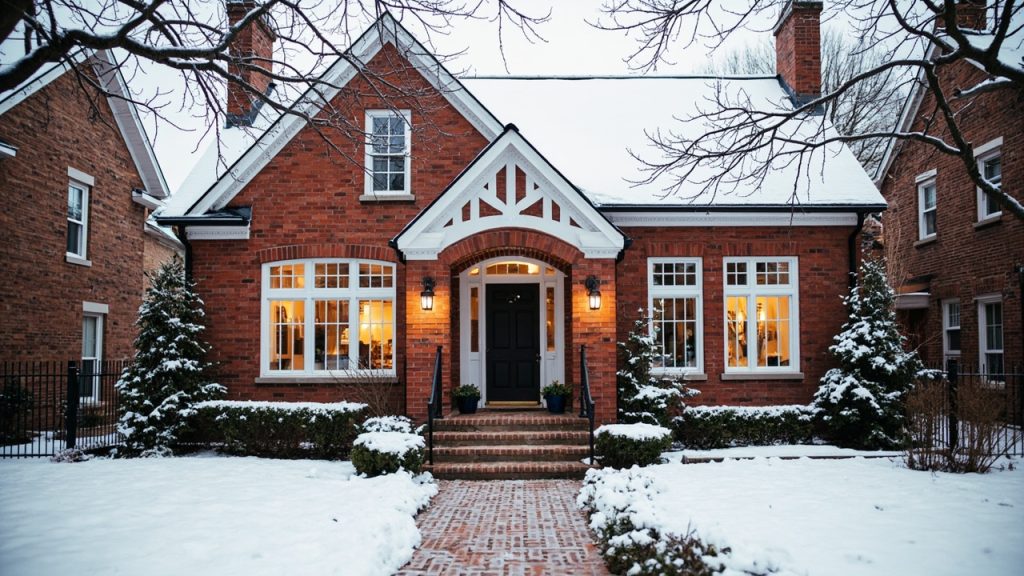
McKinley Park homeowners are increasingly transforming historic coach houses into legal living spaces. The expansion of the Chicago Additional Dwelling Unit ordinance has made these conversions a primary focus for property owners in the 60609 zip code. Many owners attempt to extend the heating system from the main house to the coach house to save on upfront costs. This approach often leads to cold rooms and high utility bills that frustrate tenants and owners alike. You must understand the technical indicators that your secondary unit needs a dedicated heating system to stay compliant with current laws and maintain reliable comfort during the 2026 winter season.
Chicago weather puts extreme stress on detached structures near landmarks like the McKinley Park lagoon or the Western Avenue corridor. Coach houses sit above unheated garages or on concrete slabs which act as massive heat sinks. These buildings have four exposed walls and a roof that lose heat rapidly. Most historic brick units in the neighborhood lack the high-density insulation found in modern homes. Relying on an underground pipe from a main house boiler causes massive heat loss before the hot water ever reaches the radiators. If your tenants complain about cold floors or if you notice heavy ice dams on the coach house roof, your current setup is failing. A dedicated system ensures the space stays at the legal minimum temperature without straining the main house furnace.
How to tell if your McKinley Park coach house needs a dedicated heating system
Determining the need for a separate HVAC unit requires more than just checking the thermostat. You must look for signs of system fatigue in your main building. If your primary furnace runs for forty minutes every hour just to keep the coach house at sixty degrees, you are overworking the equipment. This leads to cracked heat exchangers and blower motor failures. We often see homeowners in McKinley Park who have to replace their main furnace every seven years because they are asking it to heat two distinct building envelopes. A dedicated system for the coach house removes this burden and extends the life of your primary equipment.
Another indicator is the presence of uneven temperatures across the coach house floor plan. Shared systems often rely on a single pump or fan that lacks the power to push air or water across a yard. This results in the front room being warm while the back bedroom stays at fifty-five degrees. This is a common problem in properties near 35th Street where narrow lots force long runs for shared utility lines. If the temperature variance between rooms exceeds five degrees, the shared system is inadequate. A dedicated unit provides localized control and eliminates the energy waste associated with pushing heat through underground trenches.
Energy efficiency is a major factor in 2026 as utility rates continue to shift. According to recent data on residential energy consumption, detached structures lose up to thirty percent of their thermal energy through poorly insulated transport lines. When you heat a coach house from the main structure, you are paying to heat the soil between the two buildings. This inefficiency shows up on your monthly bills and decreases the overall performance of your HVAC equipment. A dedicated unit installed within the coach house envelope eliminates this transport loss entirely. This ensures that every BTU of heat you pay for stays inside the living space where it belongs.
Technical Deep Dive into Manual J Load Calculations for 2026
To determine the exact needs of a coach house, we perform a Manual J load calculation. This is the industry standard for sizing HVAC equipment based on the specific physical characteristics of a building. In McKinley Park, we must account for the high thermal mass of Chicago common brick. This material absorbs heat during the day and releases it at night, but it also allows for significant air infiltration. Our calculations for 2026 include several key variables that generic online calculators miss.
We start by calculating the total square footage of every wall, ceiling, and floor exposed to the outside air. For a coach house, this is usually one hundred percent of the building envelope. We then apply R-values for the insulation. Many older coach houses only have R-11 in the walls and R-19 in the attic, which is far below current 2026 standards. We also calculate the infiltration rate, which is the amount of air that leaks through cracks in the masonry or around window frames. This is measured in Air Changes per Hour at fifty Pascals. A typical unrenovated McKinley Park coach house might have an ACH50 of fifteen, while a modern conversion aims for less than three.
The Manual J also accounts for solar gain through windows. North-facing units in 60609 require more heating capacity because they never receive direct sunlight in the winter. We calculate the sensible heat load, which is the energy needed to change the air temperature, and the latent heat load, which is the energy needed to manage humidity. In 2026, we also account for the heat generated by modern appliances and occupants. A studio coach house has a different load profile than a two-bedroom unit with a full kitchen. Without a precise Manual J calculation, you risk installing a system that is either too small to handle a Chicago blizzard or too large to dehumidify the space in the summer.
Comparison of Heat Load Requirements by Construction Type
| Construction Style | Typical BTU per Square Foot | Insulation Level | Common Issue |
|---|---|---|---|
| Uninsulated Common Brick | 50 to 65 BTU | Low (R-3 to R-5) | Moisture seepage through masonry |
| Renovated Brick with Spray Foam | 25 to 35 BTU | High (R-21 or higher) | Overheating due to tight seal |
| Modern Wood Frame ADU | 20 to 30 BTU | Current 2026 Standard | Needs ERV for fresh air intake |
| Coach House Above Unheated Garage | 60 to 75 BTU | Varies (High Floor Loss) | Ice cold floors in winter months |
The 2026 Chicago ADU Ordinance Updates and Case Study
In early 2026, the City of Chicago updated the Chicago Additional Dwelling Unit ordinance to simplify the conversion process for coach houses in neighborhoods like McKinley Park. A significant change involves the requirement for independent climate control. The city now mandates that any new ADU permit must include a dedicated heating source capable of maintaining sixty-eight degrees without relying on the primary structure. This change protects tenants and reduces legal disputes between landlords and the Department of Buildings over temperature violations.
Consider a recent case study on a property located near Damen Avenue and 33rd Street. The owner had a two-story brick coach house that was historically used for storage. When they applied for a conversion permit under the 2026 rules, they initially planned to pipe steam heat from the main house boiler. The city inspector rejected the plans, citing the new ordinance section on independent utility systems. The owner had to pivot to a dedicated electric heat pump system. This required a new electrical sub-panel and a specific permit for the outdoor condenser unit.
The result was a more valuable property. The tenant in the coach house now has their own thermostat and pays their own electric bill through a separate meter. This setup removed the landlord from the middle of utility disputes. It also ensured that the coach house stayed warm during the recent February cold snap without affecting the heating in the main house. The property owner noted that the rental value increased because the unit now offers modern comforts like central air and precise temperature control. Following the 2026 ordinance is not just a legal requirement, it is a smart business move for Chicago landlords.
Signs Your Shared System is Overloaded
Your main house furnace was likely sized only for the main structure square footage. When you add a coach house to that load, the system runs longer cycles than it was engineered to handle. You will notice the main house furnace clicking on and off constantly. This is known as short-cycling if it happens too fast, or long-cycling if it never stops. Both cause premature wear on the blower motor and heat exchanger. If you are calling for emergency furnace repair services every few months, your system is likely undersized for the total load. Separating the units extends the life of your main furnace.
Utility bills provide another clue. Compare your current gas or electric bills to the recent averages from the previous year. If you see a spike that exceeds the standard rate increases from Peoples Gas or ComEd, the heat loss in the transition pipes is the culprit. Underground lines lose significant energy regardless of how much insulation you wrap around them. Even high-grade foam insulation cannot compete with a dedicated unit located inside the coach house envelope. In 2026, energy efficiency is a priority, and losing twenty-percent of your heat to the soil in your backyard is no longer acceptable.
Mechanical stress also manifests as noise within the system. If you hear banging or whistling in the pipes that lead toward the back of the lot, the system is struggling to move air or water. This physical strain eventually leads to a complete system failure, often during the coldest weeks of the year. In 2026, we see many McKinley Park property owners moving toward total system separation to avoid these emergency situations. Protecting your investment means acknowledging when the current equipment has reached its functional limit.
Identifying Mechanical Stress on Shared Boilers
| Symptom | Technical Cause | Long Term Impact |
|---|---|---|
| Banging in pipes | Thermal expansion stress | Leaking joints and water damage |
| Lukewarm radiators | Inadequate circulator head pressure | Tenant complaints and code violations |
| Frequent pump failure | Overworked motor windings | High annual maintenance costs |
| Rapid pressure drops | Leaks in underground transition lines | Boiler dry fire and total failure |
Modern Heating Solutions for Coach Houses in 2026
In 2026, technology has improved for cold climate applications. Air source heat pumps now work efficiently even when Chicago temperatures drop below zero. These systems provide both heating and cooling in a single unit. This eliminates the need for window AC units which are common in McKinley Park. Removing window units improves security and reduces air leaks during the winter. We recommend specific brands that have proven themselves in the 60609 climate.
- Cold climate heat pumps maintain high efficiency at minus-thirteen degrees Fahrenheit.
- Ductless mini-split systems allow for multiple zones in larger coach houses.
- Smart thermostats provide remote monitoring for landlords to ensure pipes do not freeze.
- Compact gas furnaces fit inside small utility closets to save living space.
- Hydronic baseboard heat offers quiet operation for studio layouts and efficient warmth.
- Energy recovery ventilators ensure fresh air circulation in tightly sealed units.
- High-efficiency air filtration improves indoor air quality for tenants.
- Zoned controls allow residents to heat only the rooms they are currently using.
For those looking at overall costs, check recent data on central air installation and heating upgrades for Chicago homes. While the initial investment for a dedicated coach house system is higher than a shared line, the ROI comes through lower bills and higher rental value. Tenants pay a premium for spaces where they control the climate. In the current market, a coach house with a dedicated HVAC system rents faster and for a higher rate than one with shared, unreliable heat.
Installation Logistics and Brand Recommendations
McKinley Park lots are often narrow, and access to the coach house can be tight. Dedicated systems like mini-splits are ideal because the outdoor condenser has a small footprint. We can mount these on wall brackets to keep them off the ground. This protects the unit from snow pile-up and leaves more room in your yard or gangway. Installation usually takes less than two days, which minimizes disruption for you or your tenants. In 2026, we prioritize equipment that meets the latest efficiency standards for rebates.
The electrical system is the backbone of any new HVAC installation. Many older coach houses in McKinley Park have outdated fuse boxes or small sixty-amp panels. To support a modern heat pump, we typically install a one-hundred-amp sub-panel. We recommend Square D QO or Eaton BR series panels for their reliability. These panels allow for the dedicated twenty or thirty-amp circuits required by modern condensers. We also use NEMA 3R rated disconnect switches for the outdoor units to ensure they are protected from the Chicago elements.
In terms of brands, we focus on equipment that offers cold climate performance. The Mitsubishi Hyper-Heat series remains a top choice for its ability to provide heat in extreme Chicago winters. The Daikin Fit system is another excellent option for its side-discharge design, which fits into narrow gangways. For those preferring a traditional forced air setup, the Bosch IDS 2.0 heat pump offers incredible efficiency by modulating its output to match the Manual J requirements of the space. These brands have strong support networks in the Chicago metro area, ensuring parts are available if repairs are ever needed.
Comparison of 2026 Recommended HVAC Brands
| Brand and Model | Best Feature | Minimum Operating Temp | Warranty Type |
|---|---|---|---|
| Mitsubishi Hyper-Heat | Flash Injection Technology | Negative 13 Degrees | Manufacturer Registered |
| Daikin Fit | Compact Side Discharge | Negative 4 Degrees | Unit Replacement Options |
| Bosch IDS 2.0 | Inverter Compressing | Negative 5 Degrees | Standard Part Coverage |
| Carrier Infinity Greenspeed | Precise Humidity Control | Zero Degrees | Limited Component |
Addressing Moisture and Air Quality in Coach Houses
Moisture control is a critical aspect of heating a coach house in 2026. Because these units are often built on slabs or over garages, they are susceptible to rising damp. A dedicated heating system helps manage this by maintaining a consistent surface temperature on the interior walls. This prevents the condensation that leads to mold growth behind furniture or in closets. When we install a new system, we often include an integrated dehumidification mode that runs during the humid Chicago summers. This protects the structural integrity of your common brick masonry.
Air quality also matters in the high-density environment of McKinley Park. Coach houses are often located near alleys or busy streets like Pershing Road. Modern HVAC systems include advanced filtration options that remove particulate matter and urban pollutants. By choosing a dedicated system with a high MERV rating, you provide a healthier living environment for your residents. This is a significant selling point in the 2026 rental market where wellness and air quality are top priorities for urban dwellers. A dedicated system allows you to manage the air for the specific needs of that building without affecting the main house.
We also evaluate the need for Energy Recovery Ventilators or Heat Recovery Ventilators. As coach houses become more airtight through modern renovation techniques, they require mechanical ventilation to prevent stale air buildup. These units work in tandem with your dedicated heating system to bring in fresh outdoor air while recovering the thermal energy of the exhausted air. This ensures the unit remains energy efficient while meeting the fresh air requirements of the Chicago building code. In 2026, a comprehensive approach to coach house climate control must include these ventilation considerations to ensure a safe and comfortable environment.
Final Considerations for McKinley Park Property Owners
Choosing the right heating system for your coach house depends on your long-term goals. If you plan to use the space as a year-round rental, a dedicated high-efficiency system is the only way to ensure tenant satisfaction and legal compliance. Shared systems are a relic of the past and do not meet the standards of 2026 Chicago living. The peace of mind that comes with a reliable, independent heater is worth the investment for any property owner in 60609.
Look for signs like uneven heating, high bills, and main house furnace strain. If these issues are present, it is time to consult with a professional familiar with McKinley Park architecture. We can provide a detailed load calculation and recommend a system that fits your budget and the specific layout of your coach house. A warm coach house is a valuable asset in the Chicago real estate market. Make sure your system is ready for the sub-zero nights ahead by choosing a dedicated solution that meets current code and performance standards. If you suspect your coach house needs a dedicated heating system, contact our local specialists today to schedule a technical evaluation and receive a detailed installation plan for your property.
{
“@context”: “https://schema.org”,
“@type”: “BlogPosting”,
“headline”: “Signs your McKinley Park coach house needs its own heating system”,
“description”: “Learn how to tell if your McKinley Park coach house needs a dedicated heating system under 2026 Chicago ADU laws for better comfort and lower utility bills.”,
“wordCount”: 2712,
“datePublished”: “2026-04-25T13:57:00.000Z”,
“dateModified”: “2026-04-25T13:57:00.000Z”,
“inLanguage”: “en-US”,
“mainEntityOfPage”: {
“@type”: “WebPage”,
“@id”: “https://5starhvacchicago.com”
},
“publisher”: {
“@type”: “LocalBusiness”,
“name”: “Five Star HVAC Chicago”,
“url”: “https://5starhvacchicago.com”
},
“author”: {
“@type”: “Organization”,
“name”: “Five Star HVAC Chicago”,
“url”: “https://5starhvacchicago.com”
},
“image”: {
“@type”: “ImageObject”,
“url”: “https://5starhvacchicago.com/wp-content/uploads/2026/03/how-to-tell-if-your-mckinley-park-coach-house-need-1.jpg”
}
}
{
“@context”: “https://schema.org”,
“@type”: “HVACBusiness”,
“name”: “Five Star HVAC Chicago”,
“url”: “https://5starhvacchicago.com”,
“address”: {
“@type”: “PostalAddress”,
“addressLocality”: “Chicago”
},
“areaServed”: {
“@type”: “City”,
“name”: “Chicago”
}
}
{
“@context”: “https://schema.org”,
“@type”: “BreadcrumbList”,
“itemListElement”: [
{
“@type”: “ListItem”,
“position”: 1,
“name”: “Home”,
“item”: “https://5starhvacchicago.com”
},
{
“@type”: “ListItem”,
“position”: 2,
“name”: “Blog”,
“item”: “https://5starhvacchicago.com/blog”
},
{
“@type”: “ListItem”,
“position”: 3,
“name”: “Signs your McKinley Park coach house needs its own heating system”
}
]
}
{
“@context”: “https://schema.org”,
“@type”: “Service”,
“serviceType”: “HVAC”,
“provider”: {
“@type”: “LocalBusiness”,
“name”: “Five Star HVAC Chicago”,
“url”: “https://5starhvacchicago.com”
},
“areaServed”: {
“@type”: “City”,
“name”: “Chicago”
},
“description”: “Learn how to tell if your McKinley Park coach house needs a dedicated heating system under 2026 Chicago ADU laws for better comfort and lower utility bills.”
}