



menu

No Heat Emergency Service in Chicago – Technicians Dispatched Within 60 Minutes

When your furnace fails on the coldest night of the year, you need more than a callback tomorrow. Our rapid-response emergency heating teams arrive fast, diagnose the failure on-site, and restore warmth to your Chicago home before pipes freeze or temperatures drop to dangerous levels.

Slider Image 1
Slider Image 2
Slider Image 3
Slider Image 4
Slider Image 5
Slider Image 7
Slider Image 8
Slider Image 9
Slider Image 10
Slider Image 11

When Chicago Cold Turns Your Home Into a危险 Zone

The temperature outside drops to 12 degrees. Your breath fogs inside your living room. You check the thermostat. Nothing. Your furnace is dead, and the house is getting colder by the minute.

In Chicago, a heating failure is not an inconvenience. It is a crisis. The Midwest winter does not wait. When Lake Michigan winds push arctic air through Lincoln Park, Logan Square, and Bridgeport, indoor temperatures can plummet below 40 degrees in hours. Water pipes freeze in walls. Elderly family members face hypothermia risk. Pets shiver. Every minute without heat increases the danger.

You need 24 hour heating repair, not a next-day appointment. You need a furnace repair team that treats your emergency like the urgent situation it is. Waiting until morning is not an option when your home is already 50 degrees and dropping.

Chicago's older homes, many built before 1960, were designed with cast iron radiators or gravity furnaces that fail suddenly. Modern high-efficiency systems have electronic igniters, pressure switches, and flame sensors that malfunction without warning. Whether you heat with forced air, a boiler, or a heat pump, equipment does not fail on a schedule. It fails at 11 PM on a Saturday. It fails during a polar vortex. It fails when you need it most.

That is why urgent heater service exists. Not for comfort. For safety. Our emergency furnace repair teams operate 24/7 because heating failures do not respect business hours. When you call, we dispatch immediately.

When Chicago Cold Turns Your Home Into a危险 Zone
How We Restore Heat in the Middle of a Chicago Winter

How We Restore Heat in the Middle of a Chicago Winter

Most heating emergencies stem from five failure points: igniters, flame sensors, pressure switches, gas valves, or blower motors. Our technicians arrive with diagnostic tools, replacement parts, and the experience to troubleshoot under pressure.

We begin with a rapid system diagnostic. We check thermostat signals, voltage at the furnace, gas supply continuity, and airflow through the heat exchanger. If the igniter glows but the burners do not light, we test the flame sensor for carbon buildup. If the blower runs but no heat comes out, we check the limit switch and pressure switch operation. We do not guess. We test.

For forced air furnaces, we inspect the combustion chamber, inspect the flue for blockages, and verify draft pressure. Chicago homes often have shared flue systems or chimneys that ice over in extreme cold, causing back-drafting and pressure switch lockouts. We clear obstructions and restore safe venting before we restore ignition.

For boiler systems common in Chicago bungalows and older two-flats, we check circulator pumps, zone valves, and aquastat controls. Low water pressure, air locks in radiators, and failed circulators all prevent heat distribution. We bleed air from the system, refill the expansion tank, and verify that hot water circulates to every zone.

If a part has failed beyond field repair, we install the replacement on-site. We carry igniters, flame sensors, pressure switches, and blower motors in our service vehicles. We do not leave your home cold while we order parts. We fix the system the same night whenever physically possible.

After repairs, we test the system through multiple cycles. We verify ignition timing, check flame color for proper combustion, and confirm the blower delivers heated air to every register. We leave when your home is warming, not when the furnace is simply running.

What Happens When You Call for After Hours Heating Repair

No Heat Emergency Service in Chicago – Technicians Dispatched Within 60 Minutes
01

Immediate Dispatch and ETA

You call our emergency line. We answer. Not a voicemail. Not a call center in another state. A dispatcher who immediately assigns a technician to your address. You receive a text with the technician's name, photo, and estimated arrival time. Most Chicago calls receive a technician within 60 minutes. We do not make you wait in a cold house wondering if help is coming.
02

On-Site Diagnosis and Repair

The technician arrives with a fully stocked service van. They test electrical continuity, gas pressure, airflow, and control signals. They identify the failed component, explain the problem in plain language, and provide the repair cost before starting work. Most emergency repairs involve replacing a single failed part like an igniter, pressure switch, or flame sensor. The technician completes the repair on-site and restarts your system.
03

Heat Restored and Verified

Your furnace ignites. Warm air flows from the registers. The technician monitors the system through three full cycles to confirm stable operation. They check flame quality, verify proper burner shutdown, and confirm the blower distributes heat evenly. Before leaving, they answer your questions and explain any maintenance your system needs to prevent future failures. You go to bed in a warm house.

Why Chicago Homeowners Call Us When the Heat Fails

You do not have time to research contractors when your house is 45 degrees. You need someone who answers the phone, shows up fast, and fixes the problem correctly the first time.

We specialize in Chicago heating systems. We know the forced air furnaces in Lincoln Park greystone buildings. We know the boiler systems in Pilsen bungalows. We know the hydronic radiant heat in Ukrainian Village lofts. Chicago has 77 neighborhoods with architecture spanning 150 years, and we have worked on heating systems in nearly all of them.

We understand Chicago building codes and permit requirements for gas appliance work. Emergency repairs that involve gas line modifications, flue alterations, or boiler pressure vessel work require permits and inspections. We pull permits when needed and complete the work to code. We do not cut corners to finish faster.

Our technicians carry licenses required by the City of Chicago for refrigeration, gas fitting, and mechanical work. They complete ongoing training on high-efficiency condensing furnaces, modulating boilers, and variable-speed blower systems. Modern equipment uses electronic controls and diagnostic codes that require specific knowledge. We invest in training because we service what we sell.

We also understand the urgency. A heating failure is not like a broken air conditioner in July. You can survive a hot day. You cannot safely stay in a 35-degree house overnight. We treat every no-heat call like the emergency it is. We dispatch immediately. We arrive prepared. We restore your heat as quickly as safety allows.

You will find cheaper companies. You will find companies that promise the same response times. But when it is 2 AM and 8 degrees outside, you want the technician who shows up with the right parts, the right tools, and the right training to get your heat working again. That is what we deliver.

What You Can Expect When You Call for 24/7 Furnace Repair

Response Time and Availability

We answer emergency calls every day of the year, including holidays. When you call, a dispatcher assigns a technician to your address within minutes. You receive a text confirmation with the technician's name, photo, and estimated arrival time. Most Chicago-area calls receive a technician within 60 minutes. Outer suburbs may see slightly longer response times depending on technician location and weather conditions. During extreme cold snaps, call volume increases, but we maintain multiple on-call crews to minimize wait times. We prioritize homes with elderly residents, young children, or medical conditions that make cold exposure dangerous.

Diagnostic Process and Cost Transparency

The technician performs a full system diagnostic before recommending repairs. They test electrical circuits, gas pressure, airflow, ignition systems, and safety controls. They explain what failed, why it failed, and what repairs are needed. You receive a written estimate before any work begins. Emergency service calls include a trip charge that covers diagnostics and the first 30 minutes of labor. If you approve the repair, that fee applies toward the total cost. If the system requires parts we do not carry, we provide temporary heat solutions when possible and return with the correct parts within 24 hours.

Quality of Repairs and Parts

We use OEM parts whenever possible. Original equipment manufacturer parts match the specifications of your existing system and provide the longest service life. When OEM parts are not available, we use high-quality aftermarket alternatives that meet or exceed original specifications. We do not install cheap universal parts that fail prematurely. Every repair includes testing through multiple heating cycles to confirm stable operation. We verify ignition timing, flame quality, airflow volume, and safety control function. The technician does not leave until your system heats your home reliably. If a repair fails within the first 30 days due to workmanship or part defect, we return and correct it at no charge.

Follow-Up and Preventive Maintenance

After the emergency repair, we contact you within 48 hours to confirm your system continues operating correctly. If the technician identified other maintenance needs during the emergency visit, we provide recommendations and scheduling options. Many heating failures can be prevented with annual maintenance. We clean burners, test ignition systems, inspect heat exchangers for cracks, and replace worn components before they fail. Maintenance visits also catch safety issues like cracked heat exchangers or carbon monoxide risks. We offer maintenance plans that include priority emergency service, discounted repair rates, and annual tune-ups. Preventing the next emergency is always cheaper than fixing one at 3 AM.

Frequently Asked Questions

You Have Questions,
We Have Answers

Is having no heat an emergency? +

Yes. In Chicago winters, no heat qualifies as an emergency. Temperatures drop below freezing from November through March, putting you at risk for frozen pipes, property damage, and dangerous cold exposure. Chicago's heating season ordinance requires landlords to maintain 68°F indoors when outdoor temps fall below 55°F. If your system fails overnight or during a cold snap, call for emergency HVAC service immediately. Prolonged exposure to indoor cold can cause hypothermia, especially for children and elderly residents. Your furnace failure needs urgent attention to prevent pipe bursts and health risks.

How long can a house go without heat? +

In Chicago, your house can safely go without heat for only 4 to 6 hours once indoor temps drop below 55°F. After that, pipes begin freezing, especially in exterior walls, basements, and crawl spaces. Chicago's freeze-thaw cycles and subzero wind chills accelerate damage. Water pipes can freeze and burst within 6 to 8 hours when indoor temps fall below 32°F. The colder it gets outside, the faster your home loses heat. Do not wait. Call emergency HVAC service the moment your system stops working to prevent catastrophic water damage and unsafe living conditions.

Who to call when heat doesn't work? +

Call a licensed HVAC contractor who offers 24/7 emergency service in Chicago. Do not wait for business hours. If you smell gas near your furnace, leave immediately and call Peoples Gas at 866-556-6002, then call a technician. For electric furnaces or heat pumps, contact an emergency HVAC service that responds fast to Chicago area calls. If you are a renter, notify your landlord immediately, then call a technician if they delay. Get someone onsite within hours, not days. Chicago winters do not wait, and frozen pipes cause thousands in damage.

What to do if there is no heat? +

First, check your thermostat settings and circuit breaker. Replace the furnace filter if clogged. If your system still does not work, call emergency HVAC service immediately. While waiting, close off unused rooms, seal drafts with towels, and open cabinet doors under sinks to prevent pipe freezing. Do not use your oven for heat. In Chicago's cold, portable space heaters can help temporarily, but never leave them unattended. Dress in layers and keep vulnerable household members warm. Do not delay repair. Frozen pipes can burst and flood your home within hours.

How long can you leave a tenant without heat? +

In Chicago, landlords must restore heat within 24 hours under the city's heating ordinance. Between September 15 and June 1, indoor temps must reach 68°F from 8:30 a.m. to 10:30 p.m. when outdoor temps drop below 55°F. At night, minimums are 66°F. If your landlord fails to act, document the issue, report it to 311, and contact Chicago's Department of Buildings. Tenants can withhold rent or repair and deduct costs in extreme cases. Do not tolerate prolonged cold exposure. Your landlord faces fines and legal action for violations.

What is the $5000 rule? +

The $5000 rule refers to IRS capital improvement guidelines. If your furnace repair or replacement costs exceed $5000, it may qualify as a capital improvement rather than a deductible repair expense for rental property owners. This impacts tax treatment and depreciation schedules. For Chicago landlords, replacing an aging furnace often crosses this threshold due to high equipment and labor costs. Consult a tax professional to determine how major HVAC expenses affect your property taxes and deductions. This rule does not apply to homeowners claiming standard deductions, only investment properties.

Is it safe to sleep in a house with no heat? +

No. Sleeping in a house without heat in Chicago winters is unsafe. Indoor temps below 60°F increase hypothermia risk, especially for children, elderly, and those with medical conditions. Cold exposure during sleep lowers your core body temperature without you realizing it. Prolonged cold disrupts sleep quality and weakens immune response. Frozen pipes can burst overnight, flooding your home and causing electrical hazards. If your furnace fails at night, use space heaters safely in your bedroom and call emergency HVAC service immediately. Do not wait until morning. Chicago cold kills.

At what temperature will pipes freeze without heat? +

Pipes freeze when indoor temps drop to 32°F or below, but damage risk starts at 40°F in unheated basements, crawl spaces, and exterior walls. In Chicago, pipes in uninsulated spaces freeze faster due to wind chill and subzero outdoor temps. Even insulated pipes can freeze if your furnace fails for 8 to 12 hours during extreme cold. Open cabinet doors under sinks, let faucets drip slightly, and call emergency HVAC service the moment your heat stops. Frozen pipes burst when thawing, causing floods and thousands in water damage.

What temperature is dangerously cold for a house? +

Indoor temps below 55°F are dangerously cold for your Chicago home. At this temperature, pipes begin freezing, humidity drops, and health risks increase. Temps below 50°F accelerate pipe damage and create unsafe conditions for children, elderly, and pets. Prolonged exposure to indoor cold below 60°F can cause hypothermia, respiratory issues, and weakened immunity. Chicago's building codes require landlords to maintain 68°F during heating season for good reason. If your furnace fails and indoor temps drop below 60°F, call emergency HVAC service immediately to prevent health risks and property damage.

How to heat up a house when heat isn't working? +

Use portable electric space heaters in main living areas, but never leave them unattended or near flammable materials. Close doors to unused rooms and seal drafts with towels or weatherstripping. Open cabinet doors under sinks to prevent pipe freezing. Dress in layers and use blankets. Do not use gas ovens, grills, or generators indoors due to carbon monoxide risk. These are temporary measures only. Call emergency HVAC service immediately to restore your furnace. Chicago winters require professional repair, not makeshift solutions. Frozen pipes and unsafe cold exposure happen fast.

Why Chicago's Extreme Temperature Swings Make Emergency Heating Repairs Critical

Chicago experiences some of the most extreme temperature swings in the United States. A typical January day might start at 15 degrees, warm to 35 by afternoon, then drop back to 5 degrees overnight. These rapid temperature changes force furnaces and boilers to cycle constantly. Frequent cycling stresses igniters, thermostats, and limit switches. Equipment that might last 15 years in a milder climate often fails after 10 years in Chicago. Lake Michigan amplifies the cold, creating wind chills that drive outdoor temperatures to minus 20 or lower during polar vortex events. When outdoor temps drop below zero, heating systems run continuously for days, pushing older equipment past its design limits. That is when failures happen. That is when you need 24 hour heating repair from a team that understands how Chicago winters destroy heating equipment.

Chicago's building stock includes thousands of homes built between 1880 and 1940, before modern HVAC codes existed. These homes have radiators, boiler systems, and gravity furnaces that require specialized knowledge to repair. The City of Chicago requires mechanical contractors to hold specific licenses for gas fitting and refrigeration work. We maintain all required city licenses and stay current on code changes that affect heating system repairs. We also understand local permit requirements. Any emergency repair that involves gas line work, flue modifications, or pressure vessel repairs requires a permit and inspection. We handle the paperwork and coordinate inspections so your repair stays compliant. Choosing a local contractor who knows Chicago codes protects you from future problems when you sell your home or file an insurance claim.
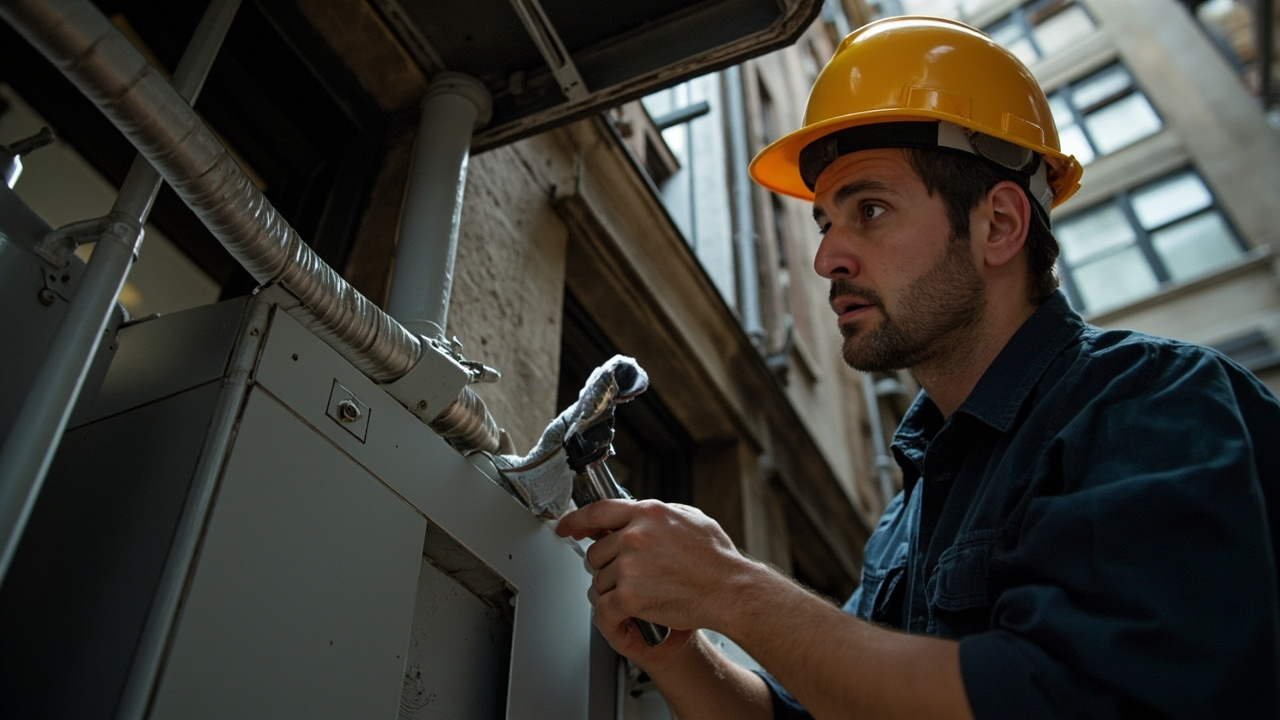
HVAC Services in The Chicago Area

Whether you’re dealing with a heating emergency or planning an AC upgrade, Five Star is just around the corner. Serving Chicago and surrounding communities, we’re proud to be the go-to HVAC company for homes and businesses alike. Use the map below to locate us quickly, or give us a call for directions or on-site service availability. We’re always ready to help, no matter where you are in the area — because comfort should never be out of reach.

Address:
Five Star HVAC Chicago, 2828 N Clark St, Chicago, IL, 60657

Additional Services We Offer

Our news updates

Latest Articles & News from The Blogs

Living in a dense Chicago neighborhood like Chinatown offers incredible access to culture and food. The narrow alleys and brick…

Quiet the Echo of Your Neighbors Loud AC in a Chinatown Alleyway

Living in a dense Chicago neighborhood like Chinatown offers incredible access to culture and food. The narrow alleys and brick…

Keeping Your Morgan Park Home Warm During a Winter Power Outage

Winter in Morgan Park brings a unique set of challenges for homeowners. The neighborhood is famous for its beautiful canopy…

Comparing Carrier and Trane for the unpredictable Chicago climate

The High Stakes of Chicago Climate Performance in 2026Chicago weather moves from one extreme to another with very little warning.…

Contact Us

Do not spend another hour in a freezing house. Call Five Star HVAC Chicago now at (708) 328-5999. We will dispatch a technician to your address immediately. Real people. Real help. Real heat.