







menu

Server Room Cooling Solutions in Chicago | Industrial-Grade Precision Systems That Prevent Costly Downtime

Mission-critical server room air conditioning and precision cooling systems engineered for Chicago's temperature extremes, designed to protect your infrastructure investment and maintain uninterrupted business operations across data centers and IT environments.

Slider Image 1
Slider Image 2
Slider Image 3
Slider Image 4
Slider Image 5
Slider Image 7
Slider Image 8
Slider Image 9
Slider Image 10
Slider Image 11

Why Chicago's Climate Demands Purpose-Built Server Room Cooling

Chicago's weather puts extreme stress on standard HVAC systems. Summer temperatures routinely exceed 90 degrees while winter lows plunge below zero. This 100-degree temperature swing forces conventional air conditioning to work harder, creating unstable humidity conditions that threaten sensitive IT equipment.

Your servers generate heat around the clock. A single rack can produce 5 to 15 kilowatts of thermal load. When ambient temperatures climb during Chicago's humid summers, standard building HVAC cannot maintain the precise 68 to 72 degree range that prevents thermal throttling and hardware failure.

The issue extends beyond temperature. Chicago's proximity to Lake Michigan creates humidity fluctuations that standard systems cannot regulate. Excess moisture causes condensation on cold surfaces inside server cabinets. Too little humidity generates static discharge that corrupts data and damages circuit boards.

Computer room air conditioning differs fundamentally from comfort cooling. Precision cooling systems monitor temperature and humidity in real-time, adjusting every few seconds rather than every few minutes. These units remove sensible heat without over-dehumidifying, maintaining the 40 to 55 percent relative humidity range your equipment requires.

A server room cooling failure does not just mean discomfort. It means lost transactions, corrupted databases, and angry customers. For financial services firms in the Loop or healthcare data centers in Streeterville, downtime translates directly to revenue loss and regulatory liability. Your infrastructure requires purpose-built data center cooling units that treat temperature control as the mission-critical function it is.

Why Chicago's Climate Demands Purpose-Built Server Room Cooling
How Precision Cooling Differs From Standard Commercial HVAC

How Precision Cooling Differs From Standard Commercial HVAC

Standard rooftop units cycle on and off based on thermostat readings, creating temperature swings of three to five degrees. Server rack cooling systems operate continuously at variable capacity, maintaining setpoints within one degree.

The airflow design matters. Precision cooling uses high-velocity, low-volume distribution to create targeted cooling zones. We calculate cubic feet per minute based on your rack density and heat load, then position supply diffusers to eliminate hot spots. Standard HVAC pushes large volumes of air across the entire space, wasting energy and creating turbulence that disrupts laminar flow patterns.

Redundancy is non-negotiable. We design N+1 configurations where you have one more cooling unit than minimum capacity requires. If one unit fails during a summer peak, the remaining units handle the full load without temperature drift. Hot aisle containment systems channel exhaust heat directly to return plenums, preventing recirculation and improving efficiency by 20 to 30 percent.

Our installations include glycol-based piping systems that prevent freeze damage during Chicago winters. When outdoor temperatures drop, standard chilled water systems risk pipe bursts. Glycol mixtures remain fluid at subzero temperatures, protecting your investment during polar vortex events.

We integrate building management systems with SNMP protocols that alert you before temperatures reach critical thresholds. You receive notifications when humidity drifts outside parameters or when refrigerant pressures indicate compressor stress. This predictive monitoring prevents failures rather than reacting to them.

Five Star HVAC Chicago specs every component for continuous duty cycles. Residential-grade equipment fails quickly under constant load. We install scroll compressors rated for 100,000 operating hours and EC fans with sealed bearings that require no maintenance.

The Server Room Assessment and Implementation Process

Server Room Cooling Solutions in Chicago | Industrial-Grade Precision Systems That Prevent Costly Downtime
01

Load Calculation and Airflow Analysis

We measure your current heat load using thermal imaging and calculate projected growth based on your infrastructure roadmap. Each server, storage array, and network switch generates specific BTU output. We document rack layouts, measure supply and return temperatures at different heights, and identify hot spots where inadequate airflow causes localized overheating. This data determines the tonnage and configuration your space requires.
02

System Design and Equipment Selection

We engineer a cooling architecture matched to your space constraints and redundancy requirements. In-row units fit between server racks for high-density environments. Perimeter units work better for distributed loads across larger rooms. We specify compressor types, refrigerant circuits, and control packages based on your uptime requirements. The design includes backup power integration so cooling continues during utility failures, preventing thermal runaway that destroys equipment in minutes.
03

Installation and Commissioning

Our technicians install precision cooling units with minimal disruption to your operations. We work during off-hours if needed, routing refrigerant lines and condensate drains without interrupting network connectivity. After installation, we run the system through full load testing, verifying that every zone maintains setpoints under maximum heat load. You receive detailed documentation including control sequences, maintenance schedules, and emergency procedures specific to your configuration.

Why Chicago Businesses Trust Local Expertise for Critical Cooling

National providers send technicians who learned HVAC in Phoenix or Atlanta. They do not understand Chicago-specific challenges. When a polar vortex drops temperatures to minus 20, your outdoor condensing units face conditions they never see in warmer climates. We know which models include crankcase heaters and low-ambient controls that prevent refrigerant migration and compressor damage.

Chicago's building codes require specific seismic bracing for mechanical equipment. We install isolation pads and restraints that meet current Chicago Building Code requirements, something out-of-state contractors often miss during inspections.

Our response time matters when cooling fails. A server room reaches critical temperature in 10 to 15 minutes after cooling stops. We dispatch from our Chicago location, not a regional hub two hours away. You get a technician onsite while your equipment is still safe, not after thermal damage has occurred.

We maintain relationships with local suppliers who stock precision cooling components. When a compressor fails or a control board needs replacement, we source parts from Chicagoland distributors who deliver within hours. National chains order from central warehouses, adding days to your downtime.

Five Star HVAC Chicago understands the industries that drive this city's economy. We have installed data center cooling units for financial services firms that cannot tolerate a single minute of downtime. We have designed precision cooling systems for healthcare organizations where server failures mean delayed patient care. We know what is at stake.

Your server room is not a comfort zone for people. It is a production environment for equipment that generates revenue. We treat it that way, applying industrial-grade solutions rather than adapting residential techniques.

What Your Server Room Cooling Project Includes

Rapid Response and Minimal Disruption

We schedule installations around your business operations, working nights or weekends if needed. Emergency service calls receive response within two hours during business days, four hours after-hours. Our technicians carry diagnostic tools that identify failures quickly, reducing troubleshooting time. We stock common components on service vehicles so most repairs complete during the first visit. For planned installations, we provide detailed timelines that account for equipment lead times, permit approvals, and testing phases, keeping you informed at every stage.

Comprehensive Load Assessment

Your initial consultation includes a thorough analysis of current and projected cooling requirements. We document existing equipment, measure temperature differentials across your space, and calculate heat loads based on nameplate data and actual power consumption. You receive a written report that explains our findings in clear terms, outlines recommended solutions, and provides multiple options at different capacity levels. We discuss backup power requirements, redundancy levels, and monitoring capabilities so you make informed decisions about protecting your infrastructure investment.

Engineered Performance Standards

Your installation meets manufacturer specifications and industry best practices for mission-critical cooling. We pressure-test refrigerant lines to verify leak-free connections, calibrate sensors for accurate temperature and humidity readings, and program control sequences that match your operational requirements. Commissioning includes full-load testing under simulated peak conditions, confirming that the system maintains setpoints when every rack operates at maximum capacity. You receive documentation showing actual performance data compared to design specifications, proving your system delivers the protection you paid for.

Ongoing Maintenance and Monitoring

Precision cooling requires regular maintenance to sustain performance. Our service plans include quarterly inspections that check refrigerant levels, clean condenser coils, test control sequences, and verify alarm functions. We track component runtime and refrigerant pressures to identify degradation before failures occur. Remote monitoring options provide real-time alerts when parameters drift outside acceptable ranges, letting us address issues proactively. Filter replacement schedules prevent airflow restrictions that reduce capacity. Annual thermal imaging identifies hot spots that indicate failing fans or blocked airflow paths, allowing corrective action before equipment damage occurs.

Frequently Asked Questions

You Have Questions,
We Have Answers

How to cool down a server room? +

Install a dedicated precision air conditioning system designed for continuous operation. Unlike standard HVAC units, precision cooling maintains tight temperature and humidity control required for server uptime. Deploy hot aisle/cold aisle configurations to separate airflow and eliminate mixing. Add supplemental cooling like in-row or in-rack units for high-density equipment. In Chicago, account for seasonal temperature swings and winter dry air that increases static discharge risk. Monitor temperatures continuously and maintain redundant cooling paths to prevent single points of failure. Proper cooling protects your business continuity and prevents expensive downtime.

How to remove heat from a server room? +

Heat removal requires strategic airflow management and proper exhaust pathways. Use precision cooling units with adequate BTU capacity to match your server load. Install containment systems that direct hot air away from cold intake zones. Deploy ceiling plenums or raised floors for return air paths. In Chicago's variable climate, ensure your system handles both summer heat loads and maintains stable conditions during winter when outdoor air economization might be viable. Calculate heat load by adding up equipment wattage, then multiply by 3.41 to convert to BTU/hr. Size your cooling capacity with 20-30% overhead for future expansion and redundancy.

How to cool a server room without AC? +

Cooling without traditional AC is risky for mission-critical environments. Evaporative cooling works in dry climates but Chicago's summer humidity makes this impractical. Free air cooling using filtered outside air only works during cooler months and requires sophisticated filtration to prevent contamination. Liquid cooling systems using chilled water loops can work but require significant infrastructure investment. For temporary situations, portable spot coolers provide emergency relief, but they lack the precision control servers need. Your business liability increases dramatically without proper environmental controls. Professional-grade cooling protects your data center investment and prevents catastrophic equipment failure.

What is the best cooling for a server? +

Precision air conditioning units provide optimal server cooling. These systems maintain temperature within 1-2 degrees and control humidity between 40-55% relative humidity. In-row cooling places units directly within server racks for targeted heat removal and reduced energy consumption. For high-density installations, rear-door heat exchangers mount directly on rack backs to capture heat at the source. Chicago data centers benefit from hybrid systems that leverage economizers during winter months when outside temperatures drop. Choose systems with N+1 redundancy to eliminate single points of failure. Your cooling choice depends on rack density, budget, and uptime requirements.

Does putting ice behind a fan work? +

This makeshift cooling method fails in server environments and creates dangerous conditions. Ice produces uncontrolled humidity as it melts, and condensation damages electronic components. Fans alone cannot remove the heat load servers generate. They just circulate warm air without actual heat extraction. Server rooms require calculated BTU removal that matches equipment heat output. In Chicago's humid summers, adding moisture risks short circuits and corrosion. This approach shows inadequate understanding of thermal management principles. Professional cooling systems remove heat through refrigeration cycles while controlling humidity. Your insurance likely voids coverage if equipment damage results from improper cooling methods.

Is 80 degrees too hot for a server room? +

Yes, 80 degrees exceeds recommended server operating temperatures and accelerates hardware failure. ASHRAE guidelines recommend 64-80 degrees as the allowable range, but optimal performance occurs between 68-72 degrees. At 80 degrees, component stress increases, fan speeds max out creating noise and consuming more power, and hard drive failure rates climb. Chicago's summer heat combined with inadequate cooling creates compounding thermal stress. Your equipment warranties may become void if you operate outside manufacturer specifications. Higher temperatures reduce mean time between failures and increase unexpected downtime. Every degree above 72 reduces reliability and increases your total cost of ownership through premature replacements.

How do the amish keep cool in the summer? +

This question is irrelevant to commercial server room cooling requirements. Amish cooling methods involve passive strategies like shade, cross-ventilation, and thermal mass, which cannot maintain the precise environmental controls data centers require. Server rooms need active mechanical cooling systems that operate 24/7 regardless of outside conditions. Chicago businesses cannot rely on passive cooling strategies when equipment generates continuous heat loads measured in kilowatts. Your data center requires engineered HVAC solutions with redundancy, monitoring, and fail-safe controls. Focus on proven precision cooling technologies that protect your business operations and meet industry standards for uptime and reliability.

What happens if a server room gets too hot? +

Overheating causes immediate throttling as processors reduce clock speeds to prevent damage. Hard drives fail rapidly above 95 degrees, and solid-state drives experience data corruption. CPUs and memory modules can suffer permanent damage within minutes at extreme temperatures. Network switches lock up, causing connectivity loss across your infrastructure. In Chicago facilities, summer cooling failures create cascading outages that halt business operations. Your liability increases when client data becomes inaccessible or corrupted. Fire risk escalates as components overheat. Insurance claims spike, and recovery costs include emergency hardware replacement, data restoration, and potential regulatory penalties for data breaches or service level agreement violations.

How do server farms stay cool? +

Large-scale data centers use multiple cooling strategies for efficiency. They deploy hot aisle/cold aisle containment to prevent air mixing and maximize cooling effectiveness. Precision cooling units with redundant configurations ensure continuous operation. Many facilities use economizers that leverage outside air when Chicago temperatures drop below server intake requirements. Chilled water systems with cooling towers provide efficient heat rejection. Advanced farms implement liquid cooling for high-density AI and GPU clusters. Building management systems monitor thousands of sensors and adjust cooling dynamically based on real-time load. Your server room can adopt scaled-down versions of these proven techniques to improve reliability and reduce operating costs.

What is the $5000 AC rule? +

This refers to a Section 179 tax deduction threshold allowing businesses to immediately expense qualifying equipment purchases rather than depreciating them over time. For Chicago businesses, HVAC systems including server room cooling equipment may qualify if they meet specific criteria. The deduction applies to tangible property placed in service during the tax year. However, tax treatment varies based on system type, building ownership, and your specific situation. Consult your tax advisor before making purchasing decisions based on deduction assumptions. This rule affects capital planning and can improve ROI on necessary cooling infrastructure upgrades. Focus on equipment that meets your operational requirements first, then optimize tax benefits.

How Chicago's Grid Instability Affects Server Room Cooling Reliability

Chicago experiences more power disruptions than most major cities due to aging grid infrastructure and extreme weather events. Summer storms knock out utility power for hours, while winter ice accumulation brings down transmission lines. Your server room cooling stops the moment utility power fails unless you have integrated backup systems. We design precision cooling with generator compatibility, ensuring compressors and fans restart properly when backup power engages. Battery backup systems bridge the gap during transfer switching, maintaining airflow during the three to ten seconds before generators come online.

Chicago's commercial building codes require annual inspections for mechanical systems serving critical infrastructure. Our installations comply with Chicago Building Code Chapter 13-196, which governs mechanical equipment in commercial occupancies. We provide documentation that satisfies inspector requirements, including load calculations, equipment specifications, and installation photographs. Local code officials recognize our work because we consistently meet standards without requiring correction notices. Your project passes inspection the first time, avoiding delays that extend your timeline and increase costs.
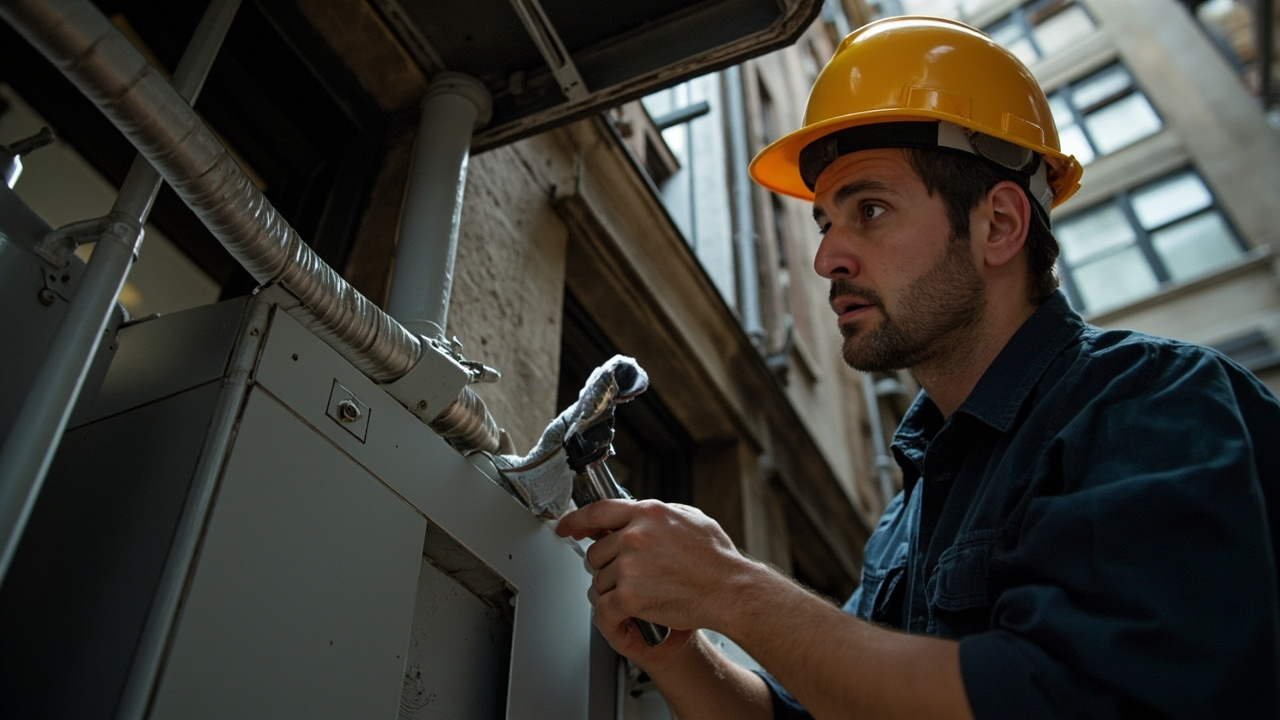
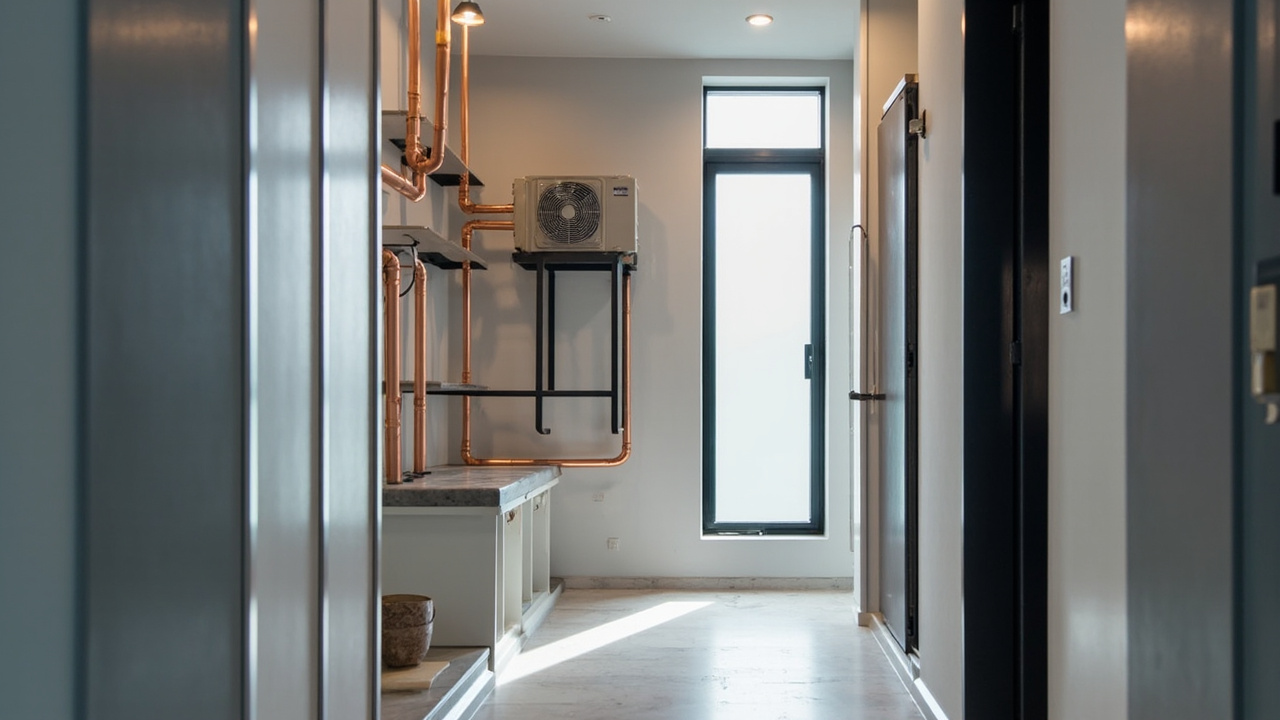
HVAC Services in The Chicago Area

Whether you’re dealing with a heating emergency or planning an AC upgrade, Five Star is just around the corner. Serving Chicago and surrounding communities, we’re proud to be the go-to HVAC company for homes and businesses alike. Use the map below to locate us quickly, or give us a call for directions or on-site service availability. We’re always ready to help, no matter where you are in the area — because comfort should never be out of reach.

Address:
Five Star HVAC Chicago, 2828 N Clark St, Chicago, IL, 60657

Additional Services We Offer

Our news updates

Latest Articles & News from The Blogs

Professional duct cleaning services for Hyde Park townhomes and historical Chicago estatesLiving in a Hyde Park townhome near the Chicago…

Professional duct cleaning services for Hyde Park townhomes and historical Chicago estates

Professional duct cleaning services for Hyde Park townhomes and historical Chicago estatesLiving in a Hyde Park townhome near the Chicago…

Common HVAC problems in Gold Coast high rises and how to fix them for reliable comfort

Living in a Gold Coast high rise offers some of the most spectacular views of Lake Michigan and the Magnificent…

Signs your McKinley Park coach house needs its own heating system

McKinley Park homeowners are increasingly transforming historic coach houses into legal living spaces. The expansion of the Chicago Additional Dwelling…

Contact Us

Your servers cannot wait. Call (708) 328-5999 now for a comprehensive cooling assessment. We provide detailed analysis, transparent recommendations, and installation timelines that keep your operations running. Five Star HVAC Chicago delivers the precision cooling your business-critical systems require.