
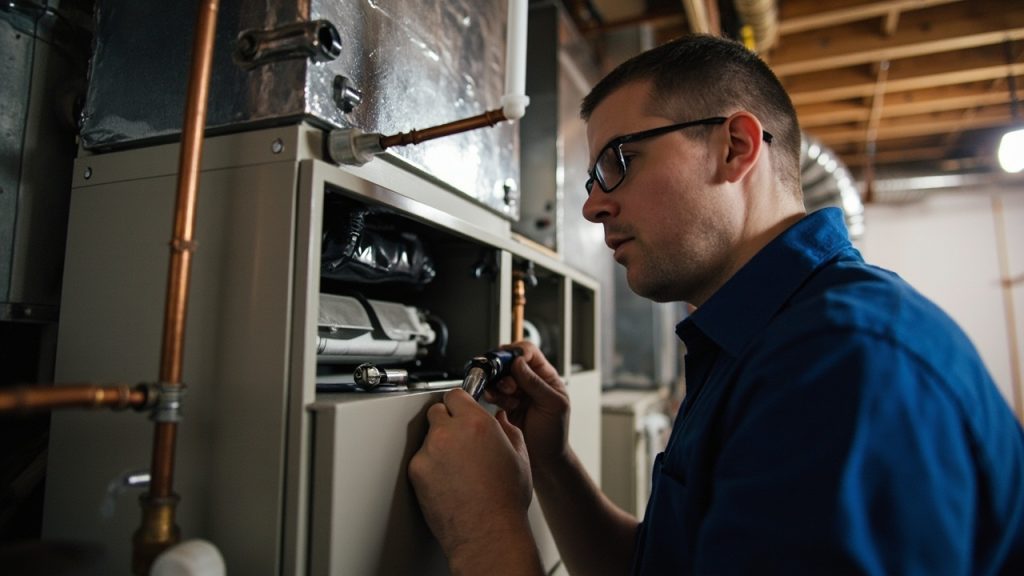
Kenwood residents understand that winter in Chicago brings more than just snow and freezing temperatures. The air inside a historic Kenwood home becomes incredibly dry when the furnace runs constantly to combat the lakefront chill. This lack of moisture causes significant issues for both the structure of your home and the well-being of your family. If you live in one of the beautiful vintage properties near the intersection of Woodlawn Avenue and 48th Street, you likely have original hardwood floors that represent a massive investment in your home value. Protecting these assets requires a sophisticated approach to indoor climate control.
Whole home humidifier installation in Chicago has become a standard requirement for homeowners who want to preserve their property and stay comfortable. When outdoor temperatures drop, the air loses its ability to hold water vapor. Your heating system further strips away moisture as it warms the air. This often results in indoor relative humidity levels falling below 15 percent, which is significantly drier than most desert environments. Understanding how to manage this environment is the first step toward a healthier and more durable home in 2026.

How Dry Winter Air Impacts Kenwood Hardwood Flooring
Kenwood is famous for its architectural diversity, ranging from late nineteenth-century mansions to mid-century modern masterpieces. Many of these homes feature premium hardwoods like rift-sawn oak, walnut, or cherry. Wood is a hygroscopic material, meaning it behaves like a sponge by absorbing and releasing moisture based on the surrounding environment. When the air becomes too dry, the wood cells contract. This leads to several visible and structural problems that can be expensive to repair.
Gapping is the most common issue we see in Chicago homes during the winter. You might notice small spaces appearing between your floorboards that disappear in the summer. Over time, repeated extreme fluctuations can cause the wood to split or crack at the ends. This permanent damage cannot always be fixed by refinishing. By maintaining a consistent humidity level between 30 and 45 percent, you provide the stability the wood needs to remain flush and beautiful. According to the National Wood Flooring Association, maintaining a controlled environment is the single most important factor in the longevity of a wood floor.
Beyond floors, dry air affects your crown molding, wooden cabinetry, and even musical instruments like pianos. In Kenwood, where many residents appreciate fine craftsmanship, a whole home humidifier serves as an insurance policy for your interior woodwork. It prevents the shrinking that leads to squeaky floors and separated joints in your staircase or built-in bookshelves. If you are also considering other upgrades for your property, you might want to look into why Logan Square homeowners trust our team for historic property HVAC upgrades as the needs for older homes are very similar across these historic Chicago neighborhoods.
Health Benefits of Proper Indoor Humidity Levels
The impact of dry air on your health is just as significant as the impact on your home. Your body relies on moisture to keep your respiratory system functioning correctly. When you breathe dry air, your nasal passages and throat become irritated. This often leads to a persistent dry cough, itchy skin, and even nosebleeds. For many Kenwood families, the discomfort of static electricity shocks and dry eyes becomes a daily frustration during the peak of winter.
Dry air also allows viruses to thrive. Scientific studies have shown that many airborne pathogens, including the flu and common cold viruses, travel more easily and survive longer in low-humidity environments. By installing a humidifier, you strengthen your body’s first line of defense. Moist nasal passages are better at trapping dust and germs before they reach your lungs. This is a critical consideration for households with young children or elderly residents who may be more susceptible to respiratory illnesses. The U.S. Environmental Protection Agency (EPA) notes that controlling indoor moisture is a key component of maintaining high indoor air quality.
Sleep quality also improves when the air is properly humidified. You are less likely to wake up with a parched throat or a congested nose. Many of our clients report that their snoring decreases and they feel more refreshed in the morning after we integrate a humidification system into their existing HVAC setup. If you find yourself needing other urgent climate solutions during the colder months, we also offer the best emergency furnace repair services in the South Loop and surrounding areas to keep your family warm and safe.
Comparing Whole Home Humidifier Types for 2026
Not all humidifiers are created equal. When choosing a system for your Kenwood home, you must consider the size of your property, your existing heating system, and how much maintenance you are willing to perform. In 2026, technology has advanced to make these systems more efficient and easier to control than ever before. Most modern units now feature digital humidistats that automatically adjust the output based on the outdoor temperature to prevent window condensation.
| Humidifier Type | Ideal Home Size | Maintenance Level | Water Usage |
|---|---|---|---|
| Bypass Humidifier | Up to 3,000 sq ft | Low (Annual pad change) | Moderate |
| Fan-Powered Humidifier | Up to 4,500 sq ft | Low (Annual pad change) | Efficient |
| Steam Humidifier | 5,000+ sq ft | Moderate (Canister change) | Highly Efficient |
Bypass humidifiers are a popular and cost-effective choice for many Chicago bungalows and smaller homes. They work by diverting some of the heated air from your supply duct through a water-soaked pad and back into the return air. This process is simple and relies on the furnace blower to move the air. For larger Kenwood estates, a fan-powered unit or a steam humidifier is often necessary. Steam units are the gold standard because they operate independently of the furnace. They heat water electrically to create steam that is dispersed directly into the ductwork, providing precise control even if the heat is not currently running.

Energy Efficiency and Cost Savings with Humidification
Adding moisture to the air can actually help you save money on your monthly heating bills. This is because humid air feels warmer than dry air. Think about a 75-degree day in the summer with high humidity versus a 75-degree day with no humidity. The moisture in the air prevents the sweat on your skin from evaporating too quickly, which is the body’s natural cooling process. When your home is properly humidified in the winter, you can often turn your thermostat down by two or three degrees without feeling any colder.
Lowering your thermostat even slightly can lead to noticeable savings over a long Chicago winter. Since the heating system does not have to work as hard, you also reduce the wear and tear on your furnace components. This extends the lifespan of your equipment and delays the need for a full system replacement. If you are planning for future cooling needs as well, it is helpful to understand central air installation costs for Lakeview Chicago homes in 2026 so you can budget for total home comfort throughout the year.
While the initial cost of a whole home humidifier involves the unit and professional installation, the long-term value is clear. You are protecting thousands of dollars in flooring and furniture while reducing your energy consumption. It is a proactive investment that pays dividends in both comfort and property preservation.
Expert Installation and System Integration in Chicago
Installing a whole home humidifier is not a DIY project. It requires cutting into your existing ductwork, tapping into a water line, and potentially making electrical connections. In Kenwood, many homes use older boiler systems with radiators instead of forced air furnaces. In these cases, a standard duct-mounted humidifier will not work. We must look at independent steam humidification options or wall-mounted units that can provide the necessary moisture without traditional ductwork. If your home uses a boiler, you might also need assistance finding a reliable boiler repair specialist in Wicker Park and Bucktown for reliable home heating as these systems require specialized knowledge.
Our installation process begins with a comprehensive assessment of your home. We measure the total square footage and evaluate your existing HVAC equipment. We then recommend a unit that can handle the specific demands of your space. We ensure that the water drain lines are properly routed and that the humidistat is placed in an area where it can accurately read the humidity levels of your main living space. We also prioritize using high-quality components from brands like Aprilaire and Honeywell which have proven reliability in the harsh Chicago climate.
Once the system is installed, we provide a thorough walkthrough on how to use it. Many homeowners are surprised to learn that you should adjust your humidity settings based on how cold it is outside. If it is 20 degrees outside, your indoor humidity should be around 35 percent. However, if the temperature drops below zero, you should lower the humidity to 25 percent to avoid frost buildup on your windows. This attention to detail is what sets a professional installation apart from a generic service.
Maintenance Guidelines for Chicago Humidifiers
Keeping your humidifier running efficiently requires very little effort, but it must be done consistently. For most evaporative units, the water panel or pad needs to be replaced once a year. In Chicago, we recommend doing this at the start of the heating season in October or November. This ensures you have a fresh, clean surface for water evaporation before the driest months hit. Over time, calcium and other minerals from our local water supply will build up on the pad, reducing its effectiveness and potentially causing water to backup.
- Check the water panel every three months during the winter to ensure it is not clogged with mineral deposits.
- Verify that the drain line is clear and flowing freely to prevent water damage in your basement or utility closet.
- Turn off the water supply to the humidifier at the end of the heating season in the spring.
- Clean the scale from the water distribution tray to ensure even saturation of the next pad you install.
- Test the humidistat in the fall to make sure it is still communicating correctly with the furnace.
If you notice any leaks or if the unit stops producing moisture, it is important to call for service immediately. Standing water can lead to mold growth or damage to your furnace’s heat exchanger. Regular maintenance is the key to ensuring your air remains healthy and your wood floors stay protected for decades. If you ever have issues with your cooling system in the warmer months, we can also assist with getting your Lincoln Park AC fixed fast before the next heat wave hits, providing year-round support for your Chicago home.
Humidity Level Recommendations Based on Outdoor Temperature
One of the most common mistakes homeowners make is setting their humidifier to 45 percent and leaving it there all winter. In a city like Chicago, where temperatures can swing 40 degrees in a single day, this can cause problems. If the indoor air is too humid when it is extremely cold outside, moisture will condense on the cold glass of your windows. This leads to water dripping down your walls, potentially causing rot in your window frames and mold growth on the drywall. Follow the 2026 guidelines below for the best results.
| Outside Temperature (Fahrenheit) | Recommended Indoor Relative Humidity |
|---|---|
| -20 Degrees | 15 Percent |
| -10 Degrees | 20 Percent |
| 0 Degrees | 25 Percent |
| +10 Degrees | 30 Percent |
| +20 Degrees and Above | 35 to 45 Percent |
Modern humidistats often include an outdoor temperature sensor that handles these adjustments for you automatically. This is a feature we highly recommend for Kenwood residents who want a set-and-forget solution. These sensors are typically mounted on the north side of the house to get an accurate reading away from direct sunlight. They allow the system to maximize comfort without risking structural damage to your home from excess condensation.
Contact Us for Kenwood Home Comfort Solutions
Protecting your health and your property starts with understanding the unique climate challenges of living in Chicago. Whether you are in a historic mansion near Lake Shore Drive or a modern condo in the South Loop, the quality of your indoor air matters. A whole home humidifier is a silent partner in your home comfort system, working behind the scenes to keep your skin hydrated, your breathing easy, and your hardwood floors in perfect condition.
We have spent over 15 years serving the Kenwood community and the surrounding neighborhoods. We understand the nuances of local architecture and the specific needs of Chicago homeowners in 2026. If you are tired of dry air, static shocks, and worrying about gaps in your floorboards, it is time to consider a professional humidification solution. Reach out to our team today to discuss your options and schedule a consultation for your home.
{
“@context”: “https://schema.org”,
“@type”: “BlogPosting”,
“headline”: “Maintaining Healthy Air and Hardwood Floors with a Whole Home Humidifier in Kenwood”,
“description”: “Learn how whole home humidifier installation in Chicago protects Kenwood hardwood floors and family health during the dry 2026 winter season.”,
“wordCount”: 2122,
“datePublished”: “2026-03-07T12:31:00.000Z”,
“dateModified”: “2026-03-07T12:31:00.000Z”,
“inLanguage”: “en-US”,
“mainEntityOfPage”: {
“@type”: “WebPage”,
“@id”: “https://5starhvacchicago.com”
},
“publisher”: {
“@type”: “LocalBusiness”,
“name”: “Five Star HVAC Chicago”,
“url”: “https://5starhvacchicago.com”
},
“author”: {
“@type”: “Organization”,
“name”: “Five Star HVAC Chicago”,
“url”: “https://5starhvacchicago.com”
},
“image”: {
“@type”: “ImageObject”,
“url”: “https://5starhvacchicago.com/wp-content/uploads/2026/03/protecting-your-hardwood-floors-and-health-with-a-1.jpg”
}
}
{
“@context”: “https://schema.org”,
“@type”: “HVACBusiness”,
“name”: “Five Star HVAC Chicago”,
“url”: “https://5starhvacchicago.com”,
“address”: {
“@type”: “PostalAddress”,
“addressLocality”: “Chicago”
},
“areaServed”: {
“@type”: “City”,
“name”: “Chicago”
}
}
{
“@context”: “https://schema.org”,
“@type”: “BreadcrumbList”,
“itemListElement”: [
{
“@type”: “ListItem”,
“position”: 1,
“name”: “Home”,
“item”: “https://5starhvacchicago.com”
},
{
“@type”: “ListItem”,
“position”: 2,
“name”: “Blog”,
“item”: “https://5starhvacchicago.com/blog”
},
{
“@type”: “ListItem”,
“position”: 3,
“name”: “Maintaining Healthy Air and Hardwood Floors with a Whole Home Humidifier in Kenwood”
}
]
}
{
“@context”: “https://schema.org”,
“@type”: “Service”,
“serviceType”: “HVAC”,
“provider”: {
“@type”: “LocalBusiness”,
“name”: “Five Star HVAC Chicago”,
“url”: “https://5starhvacchicago.com”
},
“areaServed”: {
“@type”: “City”,
“name”: “Chicago”
},
“description”: “Learn how whole home humidifier installation in Chicago protects Kenwood hardwood floors and family health during the dry 2026 winter season.”
}