
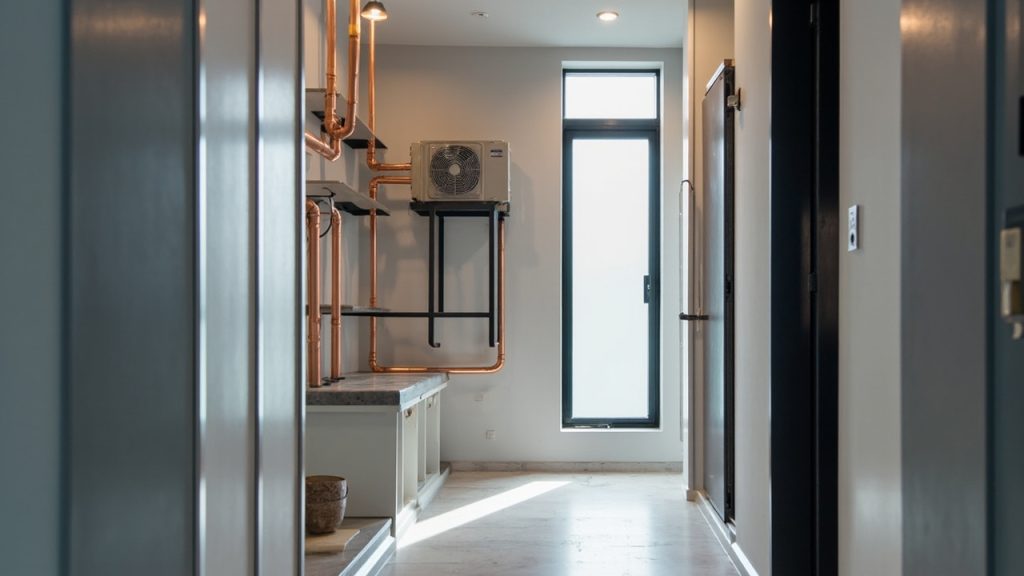
Living in a Gold Coast high rise offers some of the most spectacular views of Lake Michigan and the Magnificent Mile. These luxury buildings use complex mechanical systems that differ significantly from standard suburban homes. When your unit fails to maintain a comfortable temperature, the cause often relates to the vertical architecture of the Near North Side. Understanding how your specific system interacts with the building loop is the first step toward a permanent fix in 2026.
Most residents in zip codes 60610 and 60611 rely on water-source heat pumps or vertical stack units. These systems tie into a central building riser that provides either hot or chilled water depending on the season. If you experience uneven heating or cooling, the problem might reside within your individual unit or stem from a larger building-wide pressure imbalance. High-rise living requires a specialized approach to climate control that accounts for wind load, stack effect, and high-density occupancy. In 2026, our team focuses on these technical nuances to ensure your comfort remains consistent throughout the Chicago seasons.
Troubleshooting water source heat pump failures in luxury condos
Water-source heat pumps are the workhorses of Gold Coast high rises. These units use a refrigerant-to-water heat exchanger to transfer heat between your apartment and the building water loop. One of the most common issues we see in 2026 involves fouled coaxial heat exchangers. Over time, minerals and particulates in the building water loop accumulate inside the unit. This buildup reduces heat transfer efficiency and often leads to the high-pressure switch tripping.
If your unit shuts down after running for only a few minutes, you may be dealing with restricted water flow. A technician must check the internal strainer and measure the temperature difference, known as Delta T, between the entering and leaving water. In 2026, advanced ultrasonic flow meters allow us to diagnose these issues without disconnecting pipes. If the flow is sufficient but the unit still struggles, the internal reversing valve may be stuck. This component switches the unit between heating and cooling modes. A failing reversing valve often results in the ac blowing warm air during a humid Chicago July.
Vertical stack units and condensation management
Vertical stack units are popular in many historic and modern high rises along Lake Shore Drive and Astor Street. These systems hide behind drywall, making them difficult to access for routine service. The most frequent emergency we encounter with stack units involves a clogged condensate drain. Because these units stack vertically throughout the building, a backup on the 20th floor can cause water damage to every unit below it. This creates a liability nightmare for condo owners.
Modern 2026 units come equipped with electronic overflow switches that shut the system down if water is detected in the primary pan. However, older systems still rely on simple gravity drains. If you notice a damp spot on your baseboards or a musty odor near your HVAC closet, you likely have an ac unit leaking water. Fixing this requires high-pressure nitrogen to clear the primary drain line and the application of antimicrobial tablets to prevent algae growth. Properly managing condensation is critical for maintaining the structural integrity of high-end finishes and preventing mold in tight urban spaces.
Comparison of high rise HVAC system types in 2026
| System Type | Typical Lifespan | Efficiency Rating | Common Local Issue |
|---|---|---|---|
| Water-Source Heat Pump | 12 to 15 years | High | Heat exchanger scaling |
| Vertical Stack Fan Coil | 15 to 20 years | Moderate | Condensate backups |
| Ductless Mini-Split | 12 to 15 years | Very High | Communication errors |
| VRF Systems | 15 to 20 years | Extreme | Refrigerant leaks |
The impact of cooling towers and chemical treatment protocols
Your high-rise HVAC unit does not operate in isolation. It is part of a massive ecosystem managed by cooling tower services and central boiler plants. If the building maintenance team fails to maintain proper water chemistry or pressure in the risers, your individual unit will suffer. We often find that residents on the upper floors of Gold Coast buildings experience more frequent outages due to air pockets trapped in the high points of the water loop. This air prevents the heat pump from exchanging energy with the loop water effectively.
Chemical treatment protocols are essential for the health of these systems. In 2026, building managers must use specific scale inhibitors like phosphonates and polymers to prevent calcium carbonate from sticking to your heat exchanger. If the building loop uses an open-loop cooling tower, it is susceptible to biological growth. Technicians must apply biocides such as glutaraldehyde or isothiazolin regularly. If you notice a slimy substance in your unit strainer, the building-wide chemical treatment is likely failing. We work with building engineers to ensure the loop water quality does not destroy your expensive individual unit.
The transition between heating and cooling seasons creates significant issues in older Gold Coast towers. Many buildings still use a two-pipe system where the entire building must be in either heating or cooling mode. During the shoulder seasons in 2026, Chicago weather often fluctuates 30 degrees in a single day. If the building is in heat mode but the afternoon sun warms your unit to 80 degrees, your heat pump will trip. The unit tries to cool your room by dumping heat into the loop, but the loop water is already 100 degrees. This thermal mismatch is a primary cause of compressor failure in two-pipe buildings.
Logistics of high rise HVAC replacement in Chicago
Replacing an HVAC unit in a Gold Coast high rise requires more than just mechanical skill. It involves complex logistics that suburban contractors cannot handle. For buildings on Michigan Avenue or LaSalle Street, we must coordinate with the Chicago Department of Transportation for crane permits if we are moving components to the rooftop. Street closures require months of planning and coordination with local ward offices. Most residents never see this side of the work, but it is essential for a successful installation.
Inside the building, we must manage freight elevator coordination. Most Gold Coast luxury towers require a Certificate of Insurance that meets specific million-dollar liability thresholds. We schedule our arrivals to match your building freight elevator reservation times to avoid delays. Our technicians use specialized floor protection to safeguard your marble or hardwood floors from heavy equipment. We also coordinate with your Homeowners Association to ensure our work complies with building-specific bylaws regarding noise and vibration during the installation process.
Removing an old vertical stack unit often involves cutting into drywall and navigating tight utility closets. In 2026, we use specialized hoisting equipment to slide new chassis into place without damaging the surrounding unit. We also handle the recovery of old refrigerants in accordance with current environmental laws. This level of logistical expertise ensures your project stays on schedule and avoids common pitfalls that lead to building fines or resident complaints.
Indoor air quality and filtration in the Gold Coast
Gold Coast residents often deal with high levels of city dust and seasonal allergens from nearby parks. Because high-rise units have limited access to fresh outdoor air, pollutants can become trapped inside. Standard one-inch fiberglass filters are insufficient for the air quality needs of a modern downtown residence. We recommend upgrading to high-efficiency pleated filters with a MERV 11 or 13 rating, provided your unit can handle the static pressure.
For residents seeking superior protection, indoor air quality solutions like bipolar ionization or UV-C light kits can be integrated into most vertical stack units. These technologies neutralize viruses, bacteria, and odors at the molecular level. This is particularly useful in older buildings where kitchen or bathroom exhaust from neighboring units might seep through shared wall cavities. Maintaining clean air is not just about comfort, it is about health in a high-density environment. Our team ensures that your filtration upgrades do not put undue strain on your blower motor.
Energy efficiency and SEER2 standards for 2026
The HVAC industry has seen significant changes in efficiency requirements recently. All new equipment must meet updated SEER2 ratings explained by current federal mandates. For Gold Coast owners considering a replacement, moving to a high-efficiency model can significantly reduce the internal electrical load of your unit. This is important because high-rise electrical panels often have limited capacity for upgrades. If you install a more efficient unit, you free up electrical capacity for other luxury appliances.
The current hvac system cost 2026 reflects the transition to newer, environmentally friendly refrigerants like R-454B and R-32. These refrigerants have a much lower global warming potential than the old R-410A. You can find detailed technical data on these substances on the EPA refrigerant transition hub. When we install a new heat pump, we ensure the system is fully compatible with the building water temperatures to maximize these efficiency gains. High-rise owners should be aware that older units using R-22 or even R-410A are becoming more expensive to repair as refrigerant supplies tighten. Upgrading in 2026 provides long-term reliability and compliance with the latest environmental standards.
Gold Coast HVAC maintenance timeline for 2026
| Frequency | Task | Purpose |
|---|---|---|
| Monthly | Filter Inspection | Prevent airflow restriction and dust buildup |
| Bi-Annually | Drain Line Cleaning | Prevent water damage and mold growth |
| Annually | Heat Exchanger Flush | Remove scale and maintain heat transfer |
| Every 3 Years | Sensor Calibration | Ensure accurate temperature and pressure control |
Preventing noise and vibration in vertical residences
Noise is a major concern in luxury condos. When a compressor starts to fail, it often produces a low-frequency hum or a sharp rattling sound that can travel through the building structure. Gold Coast residents should not have to tolerate disruptive mechanical noise. Modern fix strategies include the installation of vibration isolation pads and acoustic jackets for compressors. These simple additions can make your HVAC unit nearly silent during operation.
If you hear whistling near your vents, you likely have weak airflow from vents caused by a failing blower motor or disconnected internal ductwork. High-rise units often use ECM motors which are very quiet but sensitive to voltage fluctuations. Regular hvac maintenance and tune ups allow us to check the amp draw of these motors and identify failing bearings before they become a noisy nuisance. Maintaining these motors correctly is essential because replacing an ECM motor in 2026 is a significant expense due to the specialized integrated electronics.
Structural vibrations can also indicate that the unit mounting brackets have loosened over time. In 60610 high rises, the constant shifting of the building due to wind load can stress these mechanical connections. We inspect the isolation springs and ensure the unit is level. A level unit operates with much less friction, which extends the life of the internal components and reduces the sound profile of the system. Our technicians specialize in these acoustic adjustments to preserve the quiet environment of your home.
Steps for residents to take during an HVAC emergency
When your system fails in the middle of a Chicago winter or a humid summer week, you need to act quickly to protect your home. Follow these steps to mitigate damage before a professional arrives.
- Turn off the power at the thermostat and the local disconnect switch near the unit to prevent electrical shorts.
- Check the condensate pan for standing water and use a shop vacuum to remove it if possible to prevent floor damage.
- Verify that the building water valves are fully open. Maintenance work in other units can lead to accidental shutoffs.
- Listen for unusual noises and note if the fan is spinning or if the unit is completely silent.
- Call for professional service to avoid further damage to the sensitive electronic controls and internal refrigerant lines.
Frequently asked questions about high rise HVAC systems
Why does my HVAC unit smell like lake water or rotten eggs?
This smell usually comes from the condensate pan or the building water loop. If bacteria grows in the standing water of your drain pan, it produces a foul odor that the fan distributes throughout your unit. We treat this with antimicrobial tablets. If the smell comes from the building loop itself, it indicates a failure in the chemical treatment protocol. We can install air scrubbers to help mitigate these odors within your unit.
Can I install a smart thermostat like Nest or Ecobee in my high rise?
Many Gold Coast buildings use vertical stack units or heat pumps that require a 24V common wire. Older buildings often lack this wire. We can install a power extender kit or pull new wiring to make your unit compatible with modern smart thermostats. This allows you to monitor your condo temperature remotely, which is helpful if you travel frequently for work or vacation.
Why is my unit blowing warm air when I set it to cool in October?
If your building uses a two-pipe system, the central plant might have already switched the entire building to heat mode. In this scenario, your unit has no cold water to use for cooling. You may need to use your window blinds to block solar heat or use a portable cooling solution until the building switches the loop back or the outdoor temperature drops in the evening.
How often should I flush my heat pump heat exchanger?
We recommend a professional flush once per year in the Gold Coast. The water loop in high rises contains minerals that create scale on the internal coils. If you do not flush the system, the scale becomes a permanent barrier that reduces cooling capacity and increases your electric bill. Regular maintenance in 2026 prevents the need for a total unit replacement prematurely.
What is the typical timeframe for a full HVAC unit replacement in a high rise?
A standard replacement takes between four and eight hours once the logistics are in place. This includes removing the old unit, installing the new chassis, connecting the water lines, and testing the system. The preparation, such as getting permits from the local building department and reserving the freight elevator, usually takes one to two weeks of lead time.
For residents in high-end buildings, these systems represent a significant investment. Attempting to repair a complex water-source heat pump without the proper tools can lead to expensive refrigerant leaks or electrical shorts. Our team provides specialized expertise for the unique mechanical challenges found in the Gold Coast and surrounding areas. Whether you need an emergency fix or are planning a full system upgrade, we understand the logistical requirements of working in Chicago high rises. Contact 5 Star HVAC Chicago to restore your comfort and protect your luxury investment in 2026.
{
“@context”: “https://schema.org”,
“@type”: “BlogPosting”,
“headline”: “Common HVAC problems in Gold Coast high rises and how to fix them for reliable comfort”,
“description”: “Learn how to fix common HVAC problems in Gold Coast high rises. Our 2026 guide covers heat pumps, vertical stacks, and Chicago building codes for luxury condos.”,
“wordCount”: 2412,
“datePublished”: “2026-04-27T10:13:00.000Z”,
“dateModified”: “2026-04-27T10:13:00.000Z”,
“inLanguage”: “en-US”,
“mainEntityOfPage”: {
“@type”: “WebPage”,
“@id”: “https://5starhvacchicago.com”
},
“publisher”: {
“@type”: “LocalBusiness”,
“name”: “Five Star HVAC Chicago”,
“url”: “https://5starhvacchicago.com”
},
“author”: {
“@type”: “Organization”,
“name”: “Five Star HVAC Chicago”,
“url”: “https://5starhvacchicago.com”
},
“image”: {
“@type”: “ImageObject”,
“url”: “https://5starhvacchicago.com/wp-content/uploads/2026/03/common-hvac-problems-in-gold-coast-high-rises-and-1.jpg”
}
}
{
“@context”: “https://schema.org”,
“@type”: “HVACBusiness”,
“name”: “Five Star HVAC Chicago”,
“url”: “https://5starhvacchicago.com”,
“address”: {
“@type”: “PostalAddress”,
“addressLocality”: “Chicago”
},
“areaServed”: {
“@type”: “City”,
“name”: “Chicago”
}
}
{
“@context”: “https://schema.org”,
“@type”: “BreadcrumbList”,
“itemListElement”: [
{
“@type”: “ListItem”,
“position”: 1,
“name”: “Home”,
“item”: “https://5starhvacchicago.com”
},
{
“@type”: “ListItem”,
“position”: 2,
“name”: “Blog”,
“item”: “https://5starhvacchicago.com/blog”
},
{
“@type”: “ListItem”,
“position”: 3,
“name”: “Common HVAC problems in Gold Coast high rises and how to fix them for reliable comfort”
}
]
}
{
“@context”: “https://schema.org”,
“@type”: “Service”,
“serviceType”: “HVAC”,
“provider”: {
“@type”: “LocalBusiness”,
“name”: “Five Star HVAC Chicago”,
“url”: “https://5starhvacchicago.com”
},
“areaServed”: {
“@type”: “City”,
“name”: “Chicago”
},
“description”: “Learn how to fix common HVAC problems in Gold Coast high rises. Our 2026 guide covers heat pumps, vertical stacks, and Chicago building codes for luxury condos.”
}